

Last Updated: November 21, 2026
Quick Summary
Improving mobility in aging dogs means managing joint wear, muscle loss and stiffness with short daily exercise, traction at home and healthy body weight. Five to ten minutes of gentle mobility work twice a day, plus non-slip surfaces and a vet check, keeps aging dogs moving more comfortably.
- Watch for slow rising, lagging on walks and stair hesitation, and get a vet check if two or more signs appear.
- Keep home sessions to five to ten minutes, twice a day, and warm up with a two-minute slow sniff-walk.
- End every session while your dog still wants more to keep exercise tolerance climbing.
- Cover the bed-to-door route with non-slip runners first, since most slips happen on smooth floors.
- Ask your vet to score body condition, as excess weight is the single biggest load on sore joints.
Table of Contents
- Why Aging Dogs Slow Down and What You Can Change
- Spotting Mobility Problems Before They Become Pain
- Senior Dog Mobility Exercises You Can Do at Home
- Building a Senior Dog Exercise Routine That Fits the Day
- Home Modifications for Dogs with Mobility Issues
- What Dog Physiotherapy for Mobility Actually Involves
- Weight, Nutrition and Joint Support That Earn Their Place
- Measuring Progress and Knowing When to Call the Vet
- Frequently Asked Questions
Why Aging Dogs Slow Down and What You Can Change
Improving mobility in aging dogs starts with understanding what is actually changing inside their bodies. Slowing down is rarely one single problem.
The good news? Much of that decline is manageable. Not reversible, but manageable.
Mobility is simply your dog's ability to move around without pain or strain.
Muscle loss also drives much of this decline alongside arthritis. For a deeper look at supporting aging joints, see our Joint Support for Aging Dogs: A Complete Guide.
Spotting Mobility Problems Before They Become Pain
Watch for changes in daily habits, not just obvious limping. Dogs hide discomfort well, and stiffness often shows up as reluctance rather than yelping.
Here is what to look for:
- Slow to stand after resting
- Lagging behind on walks they used to lead
- Hesitating at stairs, the car or the couch
- Stiff front or back legs for the first few minutes of movement
A common mistake is writing these off as "just old age." They are common in senior dogs, but they are not inevitable.
Watch out: pushing a stiff dog to "walk it off" can make joint strain worse.
Senior Dog Mobility Exercises You Can Do at Home
Senior dog mobility exercises work best when they are short, gentle and matched to what is actually limiting your dog.
Match the Plan to the Problem
Dogs often fall into broad patterns, and the exercise emphasis shifts accordingly:
- Stiff but strong (often arthritis). Prioritise range of motion and warm-up. Slow leash walks, cookie stretches and gentle figure-eights keep joints moving without loading them hard. Strength work is secondary until stiffness eases.
- Weak hind end (muscle loss, post-surgery). Prioritise controlled strength: sit-to-stand, supported leg lifts and weight shifts. Keep repetitions low and quality high.
- Poor balance or wobbliness. Prioritise stabilising drills on non-slip surfaces, wide turns and supported standing. Avoid tight circles and uneven ground.
- Post-injury or post-operative. Follow the treating vet's or rehab therapist's protocol exactly. Home exercise should not outrun professional guidance; ask what is permitted at each stage.
A dog can sit in more than one pattern, so start with the one that matches the biggest daily limitation and reassess weekly.
The Core Exercises
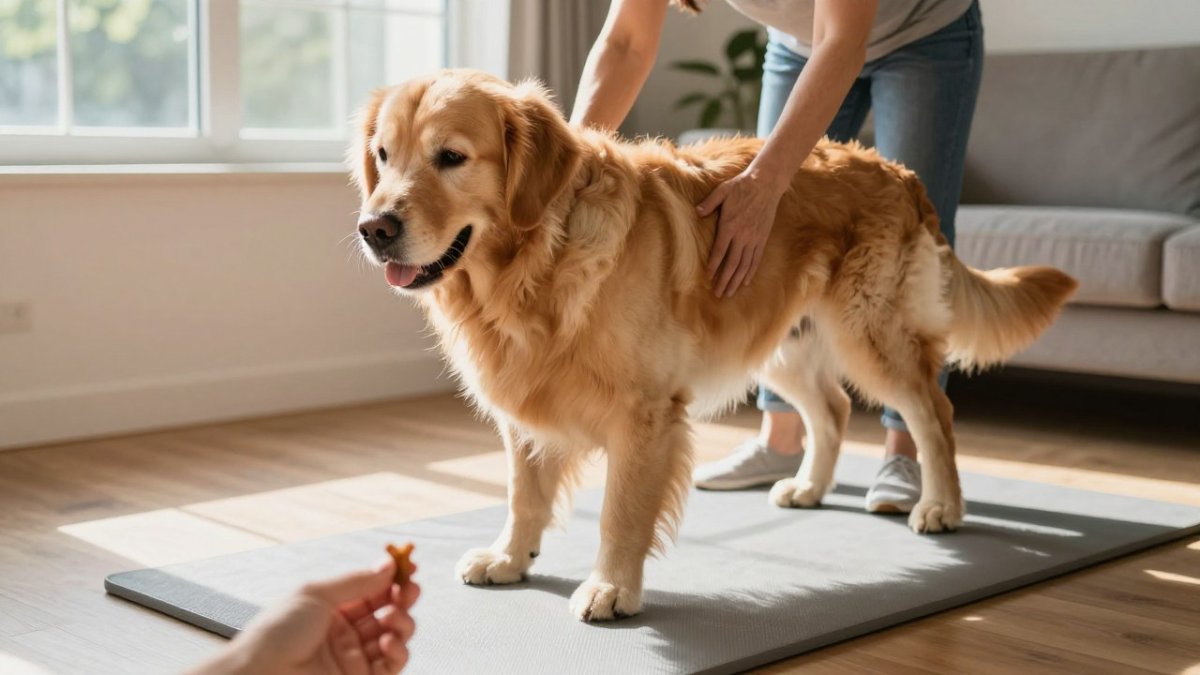
- Standing weight shifts. With your dog standing squarely, gently press on one hip so it shifts weight to the opposite leg. Hold two seconds. Repeat five times each side.
- Cookie stretches. Hold a treat at your dog's shoulder, then slowly draw it toward the hip so the head turns and the spine curves. Repeat three times each side.
- Leg lifts. Support the belly with a towel, then lift one front paw a few centimetres and set it down. Five reps per leg.
- Sit-to-stand. Ask for a sit, then a stand, five times. This builds hind-end strength without impact.
- Slow figure-eights. Walk your dog in wide loops around two chairs. Tight turns are hard on joints, so keep them wide.
Warm Up, Progress Slowly, and Know When to Stop
A two-minute warm-up, a slow sniff-walk on a non-slip surface, prepares joints and muscles before any home drill. Increase difficulty in small steps: add one repetition, then one set, then a slightly longer hold, and only change one variable at a time.
Stop the session and rest if you see any of these:
- Reluctance to continue, turning away or lying down mid-drill
- Lip licking, yawning, panting out of proportion to effort, or a tense face
- A new limp, or a leg held up after exercise
- Stiffness that is worse the next morning rather than better
Watch out: a dog that is sore for more than a day after a session has done too much, drop back to the previous level for a week before trying again, and mention it to your vet if it recurs.
Weight Shifting and Balance Drills
Balance work rebuilds the small stabilising muscles that protect joints. Stand your dog on a non-slip mat and ask for a slow head turn to each side while it holds position. Then try a gentle tail-pull game: hold a treat at the hip and let the dog pivot to reach it.
Keep drills to three or four reps. Balance work is tiring in a way walking is not, so a tired dog is a sign you did enough.
Building a Senior Dog Exercise Routine That Fits the Day
A senior dog exercise routine should fit around your dog's energy, not the other way around. Most older dogs do best with two or three short walks and one home session daily.
| Time of Day | Activity | Duration | Purpose |
|---|---|---|---|
| Morning | Slow sniff-walk at your dog's pace | 10-15 min | Loosens stiff joints |
| Midday | Home exercises and weight shifts | 5-10 min | Builds strength and balance |
| Afternoon | Short toilet walk | 5-10 min | Keeps joints moving |
| Evening | Gentle walk or swim if available | 10-15 min | Low-impact movement |
Duration
Swimming and shallow-water exercise are excellent for senior dogs because water supports the body while joints move through their full range of motion.
A useful rule is to end every session while your dog still wants more, which helps keep exercise tolerance climbing.
Home Modifications for Dogs with Mobility Issues
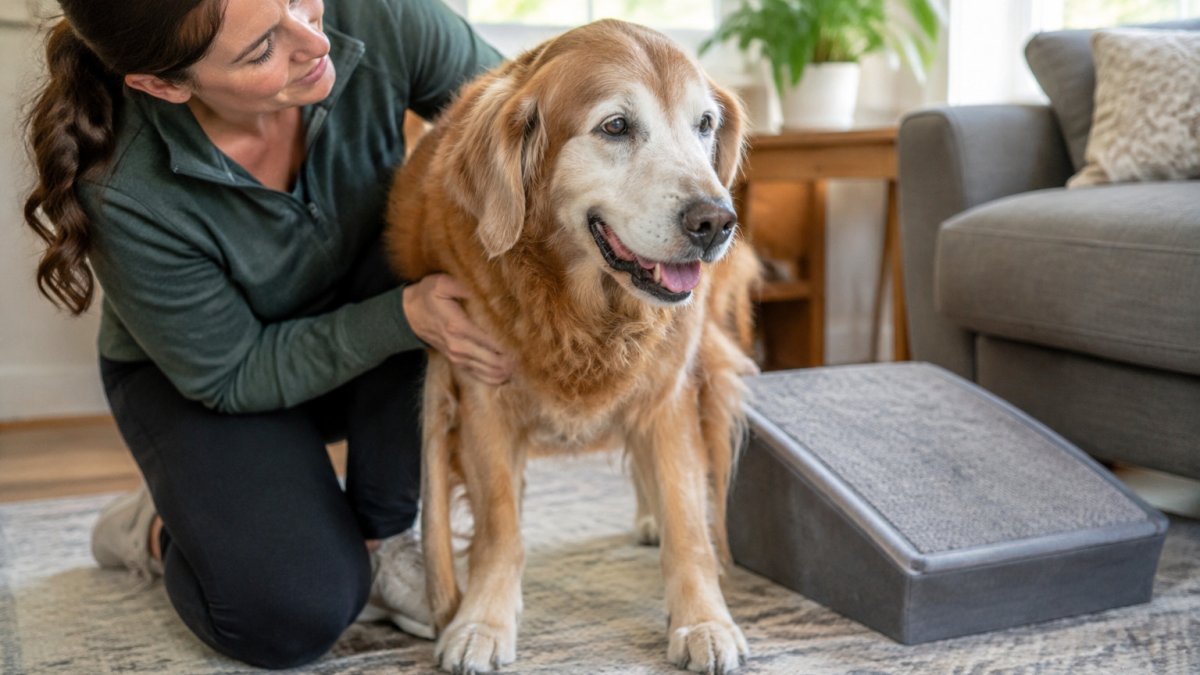
Home modifications for dogs with mobility issues are often the fastest win available. Most slips and strains happen on smooth floors, not out on walks, and the biggest gains come from setting up the whole route your dog uses each day, not just one room.
Start with traction. Non-slip surfaces in the main walkways, plus gripping booties for older dogs on timber or tile, cut down on slipping and give your dog confidence to move.
Room-by-Room Setup
Walk your dog's daily route and fix the friction points in order:
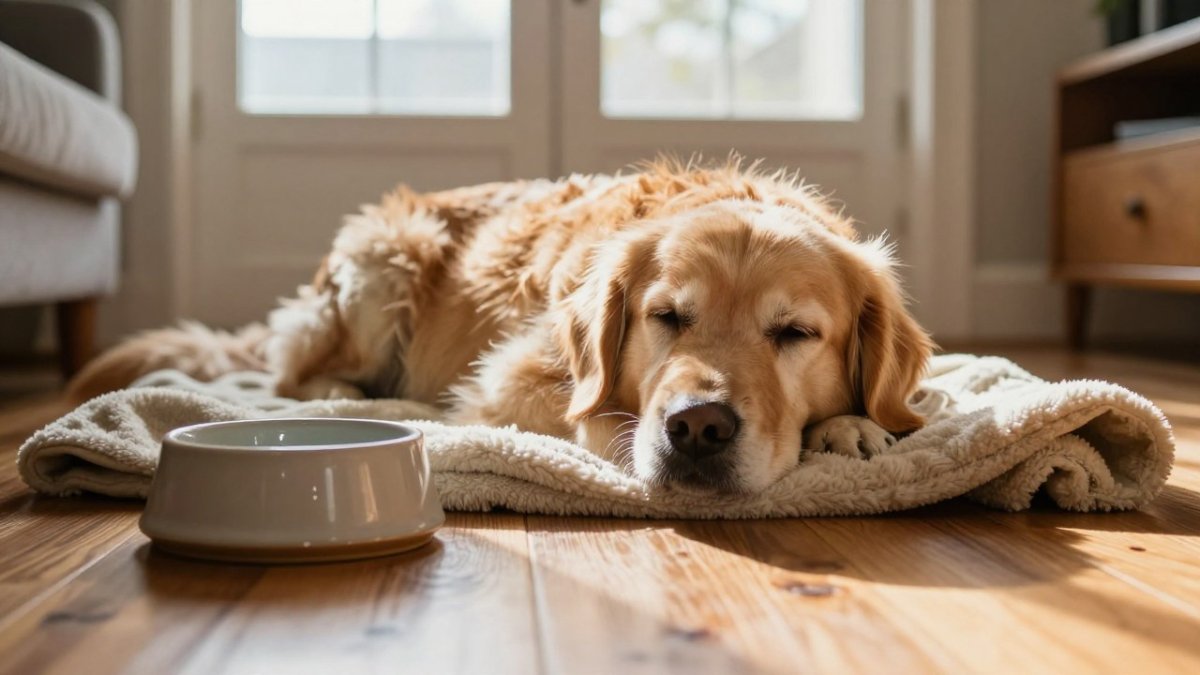
- Sleeping area. Orthopaedic bedding that supports joints, placed on a non-slip mat so it doesn't slide when your dog rises. Keep the bed away from draughts and within easy reach of water.
- Main walkways. Rugs or runners over tiles, timber and polished concrete, secured at the edges so they don't bunch. Cover the path from bed to door first.
- Food and water. Raised bowls reduce neck and shoulder strain, and placing them on a non-slip mat stops the bowl skating. Keep water within easy reach so your dog doesn't ration trips.
- Stairs. Block them with a baby gate and carry your dog, or fit a ramp if the stairs are shallow. If your dog must use stairs, add non-slip treads and a light at both ends.
Car Entry and Getting In and Out
Car entry is where many older dogs strain. A ramp or folding steps for the boot, plus a non-slip mat inside, lets your dog load without a jump. For dogs that can't use a ramp, a support harness with a handle lets you take part of the weight while your dog keeps its feet. Practise loading when you're not in a hurry, and reward each calm step.
Harnesses, Paw Care and Daily Handling
A well-fitted support harness spreads load across the chest and hindquarters and gives you a safe handhold for stairs, the car and slippery patches.
Paw care matters more as nails lengthen and grip fades. Keep nails trimmed so paws sit flat, check pads for cracks, and consider booties for timber or tile.
Comfortable rest matters too: a dog that sleeps well recovers better, and a dog that can reach water, food and its bed without slipping is more willing to move at all.
What Dog Physiotherapy for Mobility Actually Involves
Dog physiotherapy for mobility is a structured program run by a qualified animal physiotherapist. It goes well beyond massage, and it is one of the most underused tools for senior dogs.
A session typically includes:
- A gait assessment to spot asymmetry and compensation
- Manual therapy to release tight muscles
- Targeted strengthening for weak limbs
- Hydrotherapy or underwater treadmill work
- A home program you repeat between visits
Your vet can refer you.
Weight, Nutrition and Joint Support That Earn Their Place
Excess weight is the single biggest load on sore joints, and healthy body weight is the cheapest mobility treatment available.
Ask your vet to score your dog's body condition, then adjust portions and treats accordingly. Senior dogs also need good quality protein to hold muscle strength.
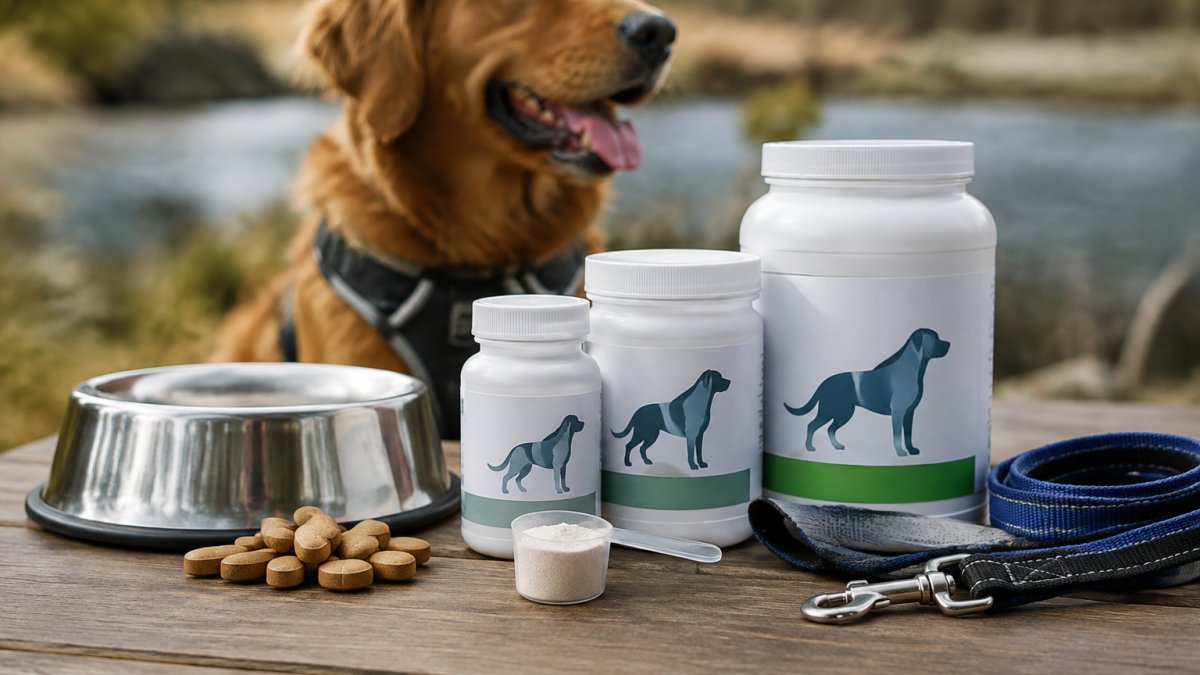
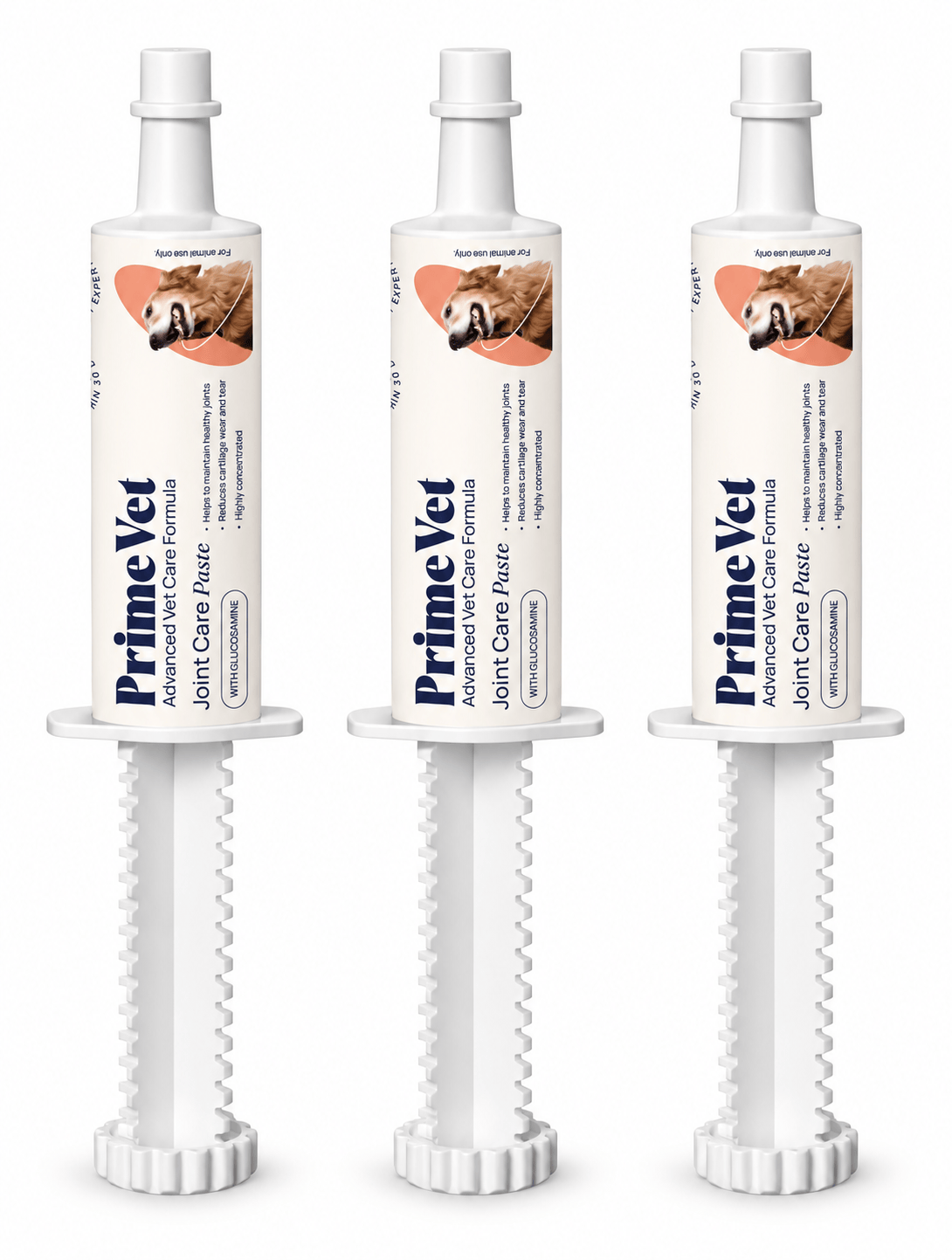
Joint support earns its place when it is consistent. If you are weighing up options, our guide to the best natural supplements for dog joints walks through what to compare, and this piece on collagen for dog mobility explains why it is included.
For dogs still stiff despite good management, a vet may suggest adding medication. Several approaches combined can be considered alongside a single product.
Measuring Progress and Knowing When to Call the Vet
Track progress with simple, repeatable measures rather than memory. A short video of your dog walking toward you once a week shows changes you would otherwise miss.
Score these weekly, one to five:
- Ease of rising from rest
- Willingness to climb stairs
- Walk distance before slowing
- Slipping frequency on floors
- Overall comfort and quality of life
Call your vet if you see sudden worsening, yelping, reluctance to eat, a leg held up, or dragging of the toes. Those need assessment, not more home exercises.
Aging dogs do not have to lose their spark.
Frequently Asked Questions
How can I improve mobility in my aging dog?
Start with three things you control: daily gentle movement, body weight and the surfaces your dog walks on. Short, frequent walks at your dog's own pace keep joints moving without overloading them. Add simple at-home exercises such as weight shifting and controlled stands to maintain muscle strength. Keep nails trimmed and put non-slip runners over slippery floors. If stiffness is worsening, book a vet check before adding anything new, and ask whether a joint supplement fits your dog's health picture.
What exercises are safe for senior dogs with stiff joints?
Low-impact movement is the safest starting point. Try five to ten minutes of slow lead walking on soft ground, three to five controlled sit-to-stands on a non-slip surface, and gentle weight shifting from side to side while your dog stands square. Swimming or shallow-water exercise is worth asking a canine physiotherapist about because it builds muscle with less joint strain. Stop immediately if you see limping, reluctance to move, heavy panting or a change in behaviour, and rest your dog for the remainder of the day.
How much exercise does an older dog need?
There is no single number, because exercise tolerance varies with breed, body condition and how advanced any joint disease is. A practical approach is several short sessions rather than one long outing: two to three walks of 10 to 20 minutes, plus a few minutes of at-home strengthening. Watch recovery the next day. If your dog is stiffer 24 hours later, the session was too much. Build duration slowly, week by week, and let your dog set the walking pace rather than pushing for distance.
How can I make my home safer for a dog with mobility problems?
Focus on traction and access. Lay non-slip runners or mats over tiles and timber, especially near doorways and food bowls. Block stairs or add a ramp to the car and to any step your dog uses daily. Raise food and water bowls so your dog does not have to splay its legs, and provide orthopaedic bedding thick enough to cushion pressure points. Keep the path to the garden clear and well lit for night toilet trips. These changes reduce slipping and joint strain without restricting your dog's independence.



Leave a comment
All comments are moderated before being published.
This site is protected by hCaptcha and the hCaptcha Privacy Policy and Terms of Service apply.