

Table of Contents
- What to Look For in Natural Dog Joint Supplements
- Glucosamine for Dogs: How It Supports Joint Mobility
- Collagen Supplements for Dogs and Cartilage Health
- Natural Ways to Support Dog Joint Health Beyond Supplements
- Joint Supplements for Older Dogs: Dosing and Safety
- Comparing Natural Joint Supplement Formats: Paste, Powder and Oil
- When to See a Vet and How Supplements Fit with Veterinary Care
- Frequently Asked Questions
Last Updated: October 5, 2026
What to Look For in Natural Dog Joint Supplements
The best natural supplements for dog joints contain proven active ingredients at meaningful doses, come from a maker that tests every batch, and match your dog's size and stage of life.
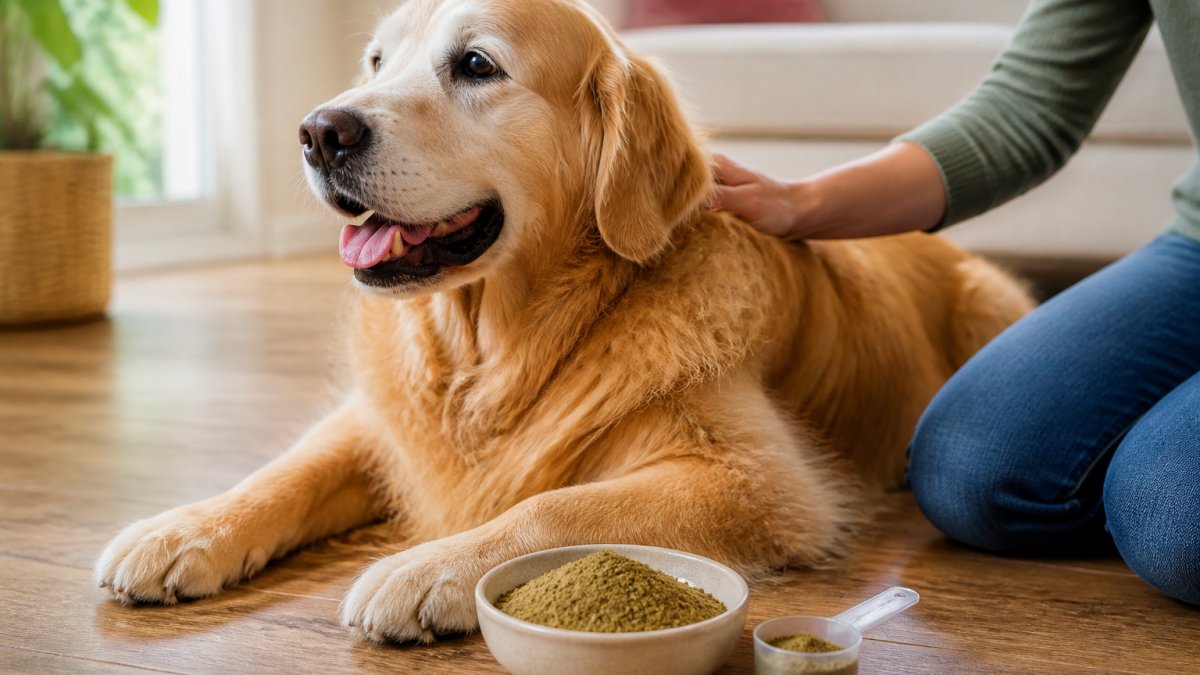
Joint problems are one of the most common reasons owners seek help for an aging dog. Arthritis in dogs is a progressive condition, and while no supplement reverses it, the right combination of ingredients can support comfort and mobility day to day.
Below, we break down the ingredients worth paying for, the formats that suit different dogs, and the red flags that separate a quality product from clever packaging.
Active Ingredients and What the Evidence Shows
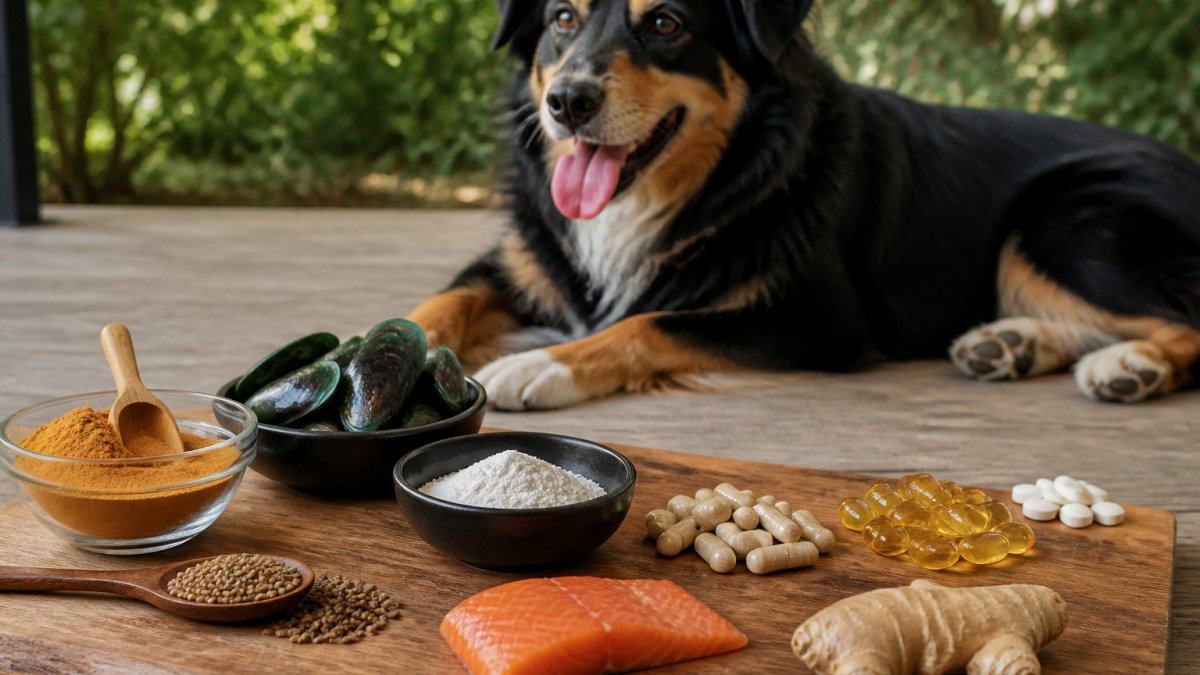
Glucosamine, chondroitin, MSM, green-lipped mussel, omega-3 fatty acids and collagen form the core of most joint formulas. Each plays a different role, and quality varies enormously between products.
Glucosamine and chondroitin support cartilage structure. MSM is included for its role in connective tissue support. Green-lipped mussel and fish oil supply omega-3 fatty acids, which many owners use to support a normal inflammatory response. UC-II collagen and curcumin appear in newer formulas, though evidence for these is still developing.
A practical rule: a product listing eight ingredients at tiny doses is usually weaker than one built around three or four actives at meaningful amounts.
Reading Labels and Assessing Product Quality
Assessing a joint supplement comes down to the active ingredient panel, the guaranteed analysis, and whether the manufacturer tests finished batches. In practice, this means ignoring front-of-pack claims and reading the fine print.
Look for:
- A named active ingredient with the amount per serving, not just "a proprietary blend"
- A batch number and a manufacturer willing to share testing details
- Clear dosing instructions by body weight
- A use-by date, not just a production date
Glucosamine for Dogs: How It Supports Joint Mobility
Glucosamine is a naturally occurring compound found in cartilage, and it is the most researched ingredient in dog joint supplements. It is used to support joint mobility and slow the wear on cartilage that comes with age and activity.
Dogs produce glucosamine naturally, but production declines with age and can fall short of what an arthritic joint needs. Supplementing aims to top up the raw materials the body uses to maintain cartilage.
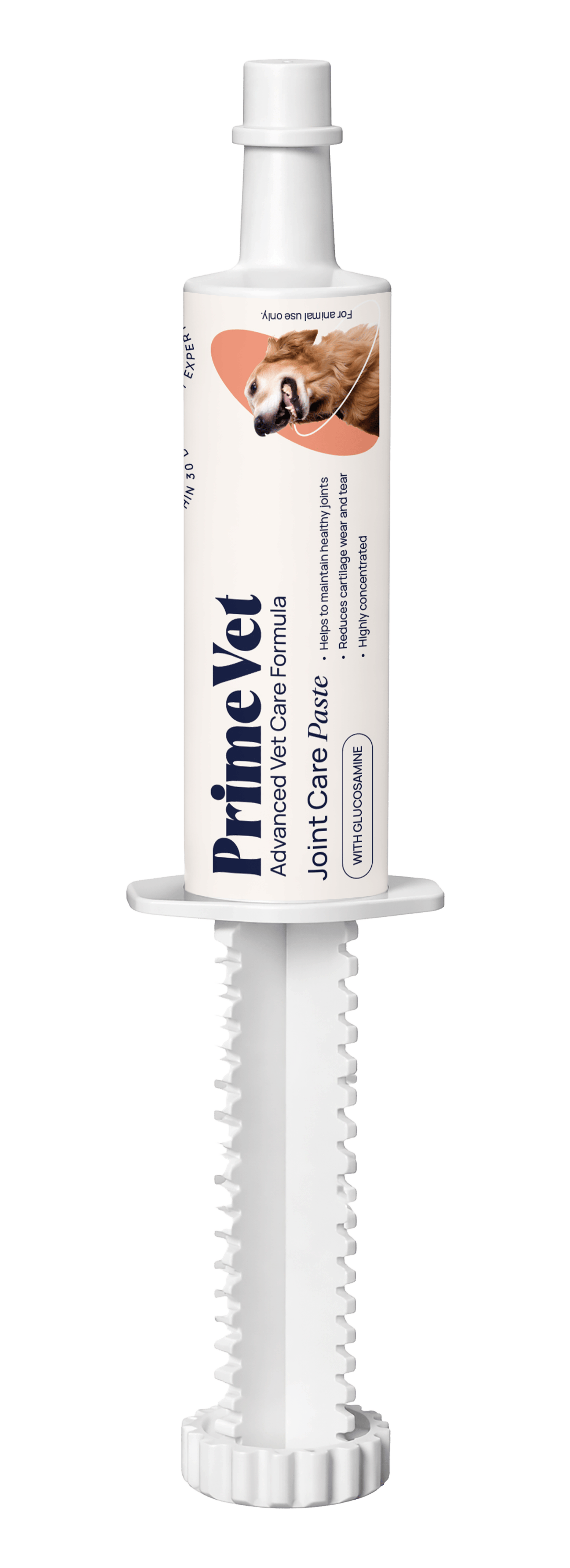
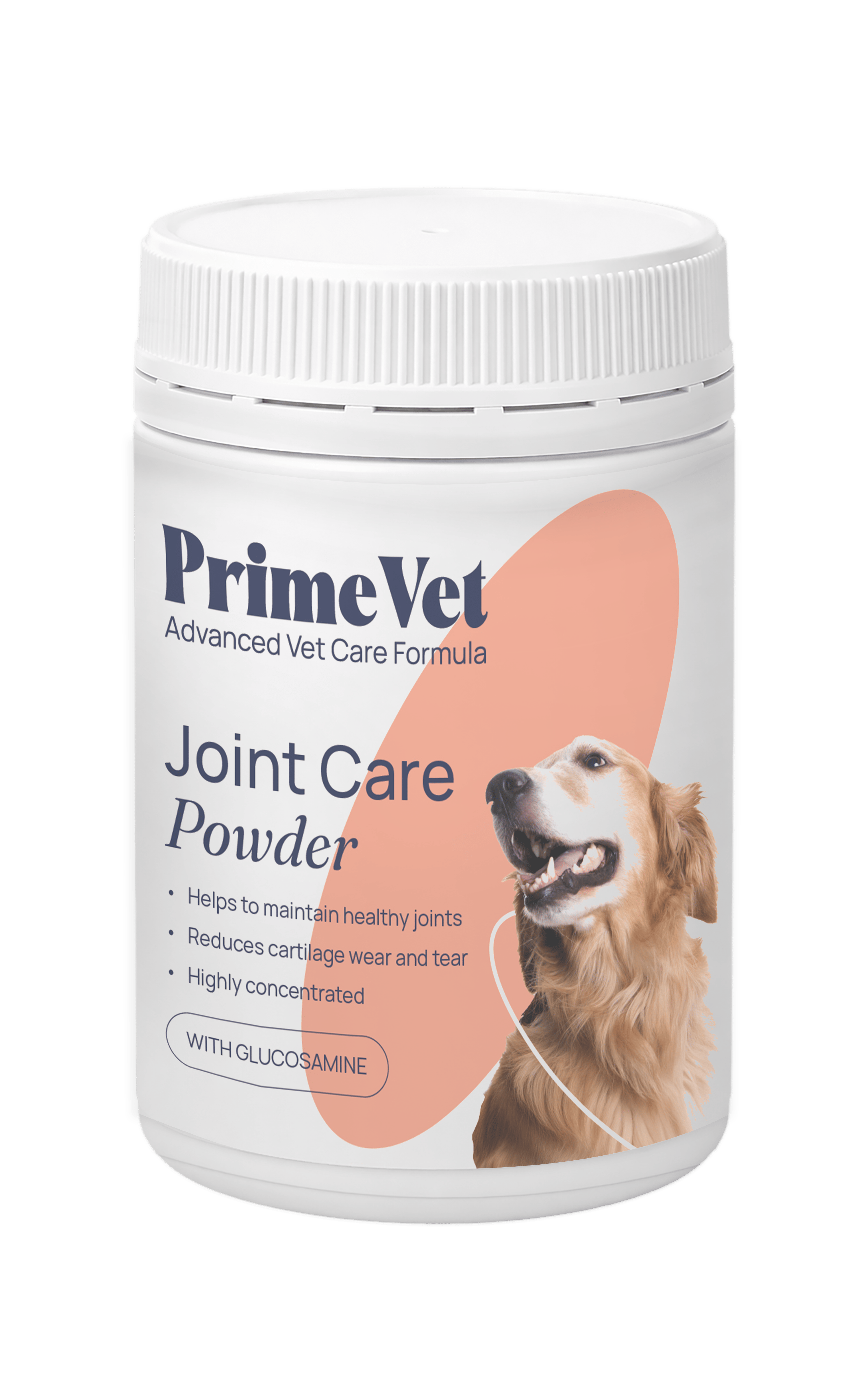
The catch is dose. A meaningful daily serving for a medium dog is far higher than most owners assume, and many budget powders simply do not deliver it. This is where a concentrated formula earns its price. Our PrimeVet Joint Care Powder delivers glucosamine at 553.2g/kg alongside MSM and chondroitin sulphate, so the daily scoop carries a genuine dose rather than a token amount.

Collagen Supplements for Dogs and Cartilage Health
Collagen supplements for dogs supply the protein building blocks of cartilage and connective tissue. Cartilage is largely type II collagen, so supporting collagen intake is a logical part of long-term joint care, but the evidence is more nuanced than most product pages admit.
Here is the honest position. Glucosamine and chondroitin have decades of veterinary research behind them, including controlled trials in dogs with osteoarthritis (pubmed.ncbi.nlm.nih.gov). Collagen has a smaller but growing evidence base, and the results depend heavily on the type and the dose.
What most guides miss is that collagen sources differ in ways that matter:
- Marine collagen is extracted from fish skin and scales. It has a smaller peptide size, which some manufacturers argue improves absorption, but it is not suitable for dogs with fish allergies.
- Bovine collagen comes from cattle hide and bone. It is the most common form in dog supplements and is generally the cheapest per gram.
- Hydrolysed collagen peptides are pre-broken-down for easier absorption. They are the form most often studied in humans, with less dog-specific data.
- Undenatured type II collagen (UC-II) is the low-dose, immune-modulating form. It is the most expensive per gram but is used in far smaller amounts.
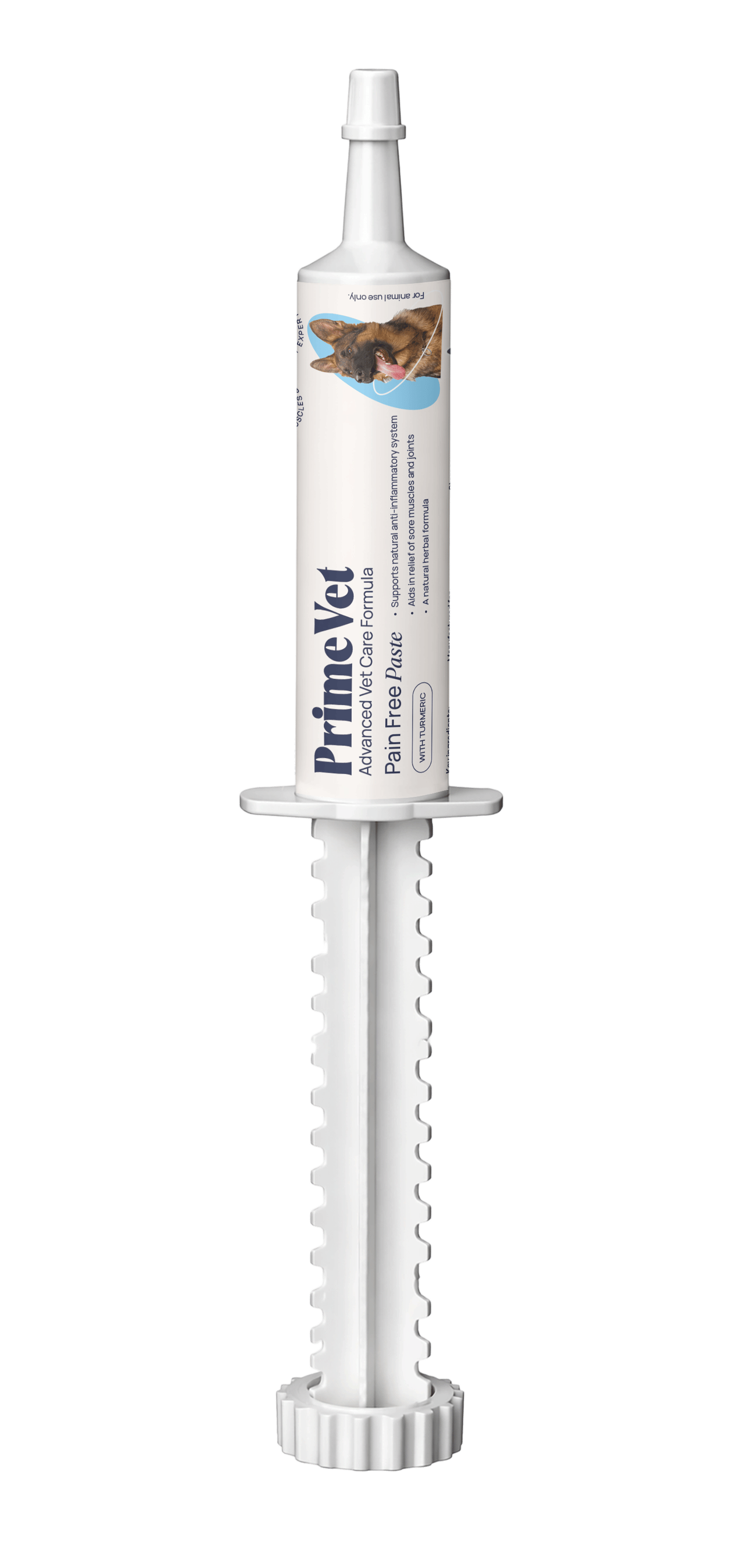
Collagen is not a quick fix. Owners typically report gradual changes over weeks rather than days, and it works best as part of a broader approach that includes weight control and appropriate exercise. Pairing collagen with glucosamine and chondroitin, as our paste and powder formats do, gives the joint both structural support and the lubrication compounds it needs.
Natural Ways to Support Dog Joint Health Beyond Supplements
Natural ways to support dog joint health extend well beyond a daily scoop. Weight management is the single most effective lever most owners have, because every extra kilogram places additional load on already sore hips and knees.
Other measures that matter:
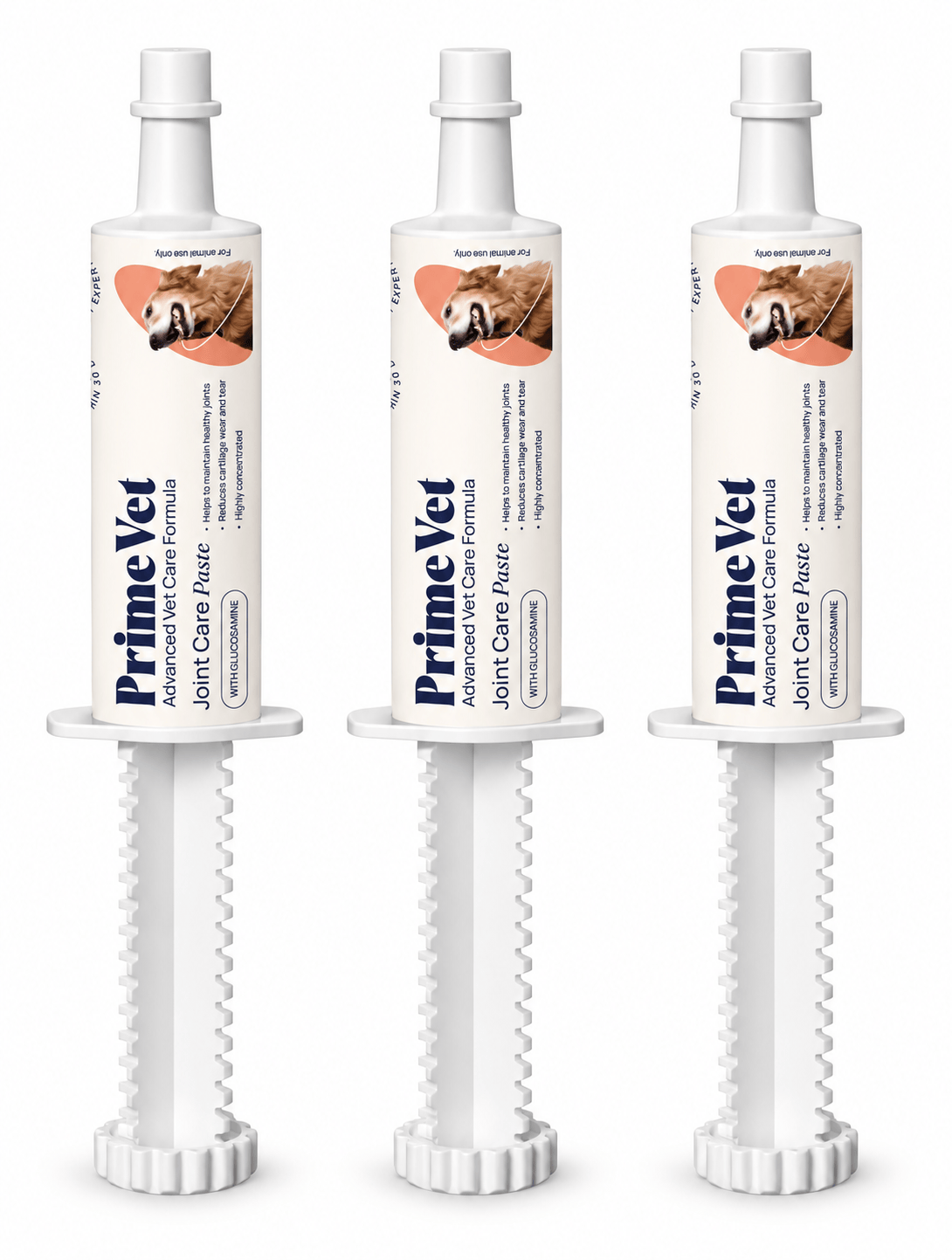
PrimeVet™ Joint Care Paste for Dogs 60ml - Pack of 3 →
- Low-impact exercise such as swimming or short, gentle walks
- Soft bedding and non-slip flooring for dogs with reduced mobility
- Ramps or steps to reduce jumping on and off furniture
- Regular nail trims to improve grip and gait
- Food-based nutrients such as raw animal parts, where appropriate and safe
Body condition matters more than the number on the scale. You should be able to feel your dog's ribs without pressing hard and see a visible waist from above. If you cannot, weight reduction will likely do more for mobility than any single supplement.
Joint Supplements for Older Dogs: Dosing and Safety
Joint supplements for older dogs need adjusted dosing, and safety depends on getting that dose right. Senior dogs often have reduced kidney or liver function, so more is not better, and the dose that suits a healthy two-year-old may not suit a twelve-year-old with early renal changes.
Dosing should follow body weight, not age alone. A small dog and a large-breed dog need very different amounts of the same ingredient, and glucosamine in particular should be measured rather than estimated.
Green-lipped mussel and fish oil are dosed differently again. Omega-3 fatty acids are typically discussed in terms of EPA and DHA rather than total fish oil weight, and the useful range for a medium dog is often cited as several hundred milligrams of combined EPA and DHA per day.
Red-flag symptoms that warrant a vet visit rather than a supplement change include:
- Sudden inability to bear weight on a limb
- Yelping when touched or lifted
- Reluctance to rise after rest that does not improve with gentle movement
- Loss of appetite combined with reduced mobility
- Any new weakness in the hind legs
| Dog Size | Typical Daily Glucosamine Range | Format That Suits | Watch For |
|---|---|---|---|
| Small (under 10kg) | Lower end of label range | Paste, measured | Overdosing from powder scoops |
| Medium (10-25kg) | Mid label range | Powder or paste | Underdosing from vague labels |
| Large (25kg+) | Upper label range | Concentrated paste | Cost per serve, not per tub |
| Senior, any size | Vet-guided | Paste, easy to adjust | Drug interactions, kidney function |
Comparing Natural Joint Supplement Formats: Paste, Powder and Oil
Format affects how easily you can dose accurately and whether your dog will actually take it. Paste, powder and oil each suit different dogs and owners.
Paste is the easiest to dose precisely and the hardest for a fussy dog to avoid, since it can be given directly or mixed into a small amount of food. Powder suits dogs that eat full meals reliably and owners managing multiple dogs, because it mixes into the bowl. Oil formats, usually fish oil, are best treated as an omega-3 addition rather than a complete joint formula.
| Format | Best For | Dosing Accuracy | Our Product |
|---|---|---|---|
| Paste | Fussy eaters, precise dosing | High | PrimeVet Joint Care Paste 60ml ($59.95) |
| Paste multipack | Long-term daily use | High | PrimeVet Joint Care Paste 3-pack ($139.50) |
| Powder | Multi-dog households, meal mixers | Medium | PrimeVet Joint Care Powder 150g ($89.95) |
If you are unsure, start with the paste. It removes the guesswork from dosing and lets you adjust up or down as your dog responds.


When to See a Vet and How Supplements Fit with Veterinary Care
Supplements support joint health, but they do not replace veterinary assessment. See your vet if your dog is limping persistently, yelping when touched, reluctant to rise, or showing sudden changes in mobility.
A vet can rule out conditions that mimic arthritis, such as cruciate injury or spinal disease, and confirm whether osteoarthritis is the cause. Once a diagnosis is in place, supplements become part of a broader plan alongside pain management, weight control and exercise.
At Farrell's and PrimeVet, our formulas were developed with veterinary input, including work by Professor David Evans BVSc PhD, and we encourage owners to share what they are giving with their vet. Supplements work best as a complement to professional care, not a substitute for it.
Frequently Asked Questions
What is the best joint supplement for dogs?
The best natural dog joint supplement contains proven ingredients like glucosamine, chondroitin, MSM and green-lipped mussel at therapeutic doses. Look for products with clear labelling, batch testing and veterinary formulation. PrimeVet Joint Care Powder and Paste both contain glucosamine (553.2g/kg), chondroitin sulphate (28.8g/kg), MSM (96g/kg), hyaluronic acid and collagen. Match the format to your dog's needs: powder mixes into food, while paste suits fussy eaters or precise dosing.
How do I help my dog's joints naturally?
Natural ways to support dog joint health include maintaining a healthy weight to reduce joint stress, providing low-impact exercise like swimming or short walks, and feeding a balanced diet rich in omega-3 fatty acids. Supplements containing glucosamine, chondroitin and green-lipped mussel support cartilage and joint lubrication. Adding food-based nutrients such as raw animal parts or fish oil can help, but consistency matters more than variety. Always introduce changes gradually and monitor your dog's mobility and comfort.
Do glucosamine supplements help dogs with joint problems?
Glucosamine for dogs is one of the most studied joint ingredients. It supports cartilage maintenance and joint lubrication, which can reduce stiffness and improve mobility in dogs with arthritis or age-related joint changes. Results vary by dog, ingredient quality and dosage. Most owners see gradual improvement over four to eight weeks. Glucosamine works best alongside other ingredients like chondroitin and MSM, and as part of a broader joint care plan that includes weight management and appropriate exercise.
Are natural joint supplements safe for dogs?
Most natural joint supplements are safe when given at recommended doses, but quality varies. Choose products from manufacturers that test for contaminants and list active ingredient amounts clearly. Side effects are uncommon but may include digestive upset. Dogs with allergies to shellfish should avoid glucosamine from shellfish sources. Always check with your vet before starting a supplement, especially if your dog takes medication for pain, inflammation or other conditions, as interactions are possible.
How long does it take for dog joint supplements to work?
Joint supplements for older dogs typically take four to eight weeks to show noticeable improvement. Some owners report changes in mobility and comfort within two to three weeks, while others need longer. Consistency is key: give the correct dose daily and track your dog's movement, willingness to walk and overall comfort. If you see no change after eight weeks, consult your vet to rule out other causes or adjust the approach. Supplements support joint health but do not reverse existing damage.
Joint problems rarely resolve on their own, and waiting for a dog to "walk it off" usually makes things harder. Farrell's and PrimeVet has supported dogs, breeders and trainers since 1953 with small-batch, veterinary-formulated nutrition built around glucosamine, chondroitin and collagen. If your dog is slowing down, our Joint Care Paste and Powder give you a measured, natural way to support mobility every day. Shop now and give your dog the joint support it deserves.

Leave a comment
All comments are moderated before being published.
This site is protected by hCaptcha and the hCaptcha Privacy Policy and Terms of Service apply.