

Table of Contents
- How Collagen Supports Joint Health and Mobility in Dogs
- Collagen's Role in Cartilage, Ligaments and Tendons
- Collagen for Dogs with Arthritis: What the Evidence Suggests
- Types of Collagen: Type I, Type II and Type III Explained
- Collagen Powder for Dogs: Dosage, Duration and Monitoring
- How to Choose the Best Collagen for Dogs
- Collagen-Rich Foods for Dogs and Other Joint-Support Ingredients
- Frequently Asked Questions
Last Updated: October 19, 2026
How Collagen Supports Joint Health and Mobility in Dogs
Collagen is the main structural protein in a dog's joints, and collagen for dog mobility works by helping cushion cartilage and hold connective tissue together. It is not a medicine and it will not rebuild a worn joint overnight, but it gives the body the raw material it uses to maintain joint function.
At Farrell's and PrimeVet, we have spent decades working alongside breeders, trainers and veterinarians on joint support, so we know the gap between what the label promises and what a dog actually feels.
Here is the honest version. Cartilage has no blood supply of its own. It relies on movement and joint fluid to carry nutrients in. That means a dog with joint issues needs two things at once: the building blocks for repair, and regular, gentle movement to deliver them. Supplements only solve half the problem.
That is why we treat collagen for dog mobility as one part of a plan, not the whole plan.
- Collagen peptides are broken into small pieces the gut can absorb
- Undenatured collagen stays intact and is studied for a different purpose
- Type I and Type III dominate skin, bone, tendon and ligament
- Type II is the main form found in cartilage
Collagen's Role in Cartilage, Ligaments and Tendons
Cartilage, ligaments and tendons all depend on collagen for strength, and each one fails in a different way when that supply runs low. Cartilage acts as the cushion between bones. Ligaments connect bone to bone. Tendons connect muscle to bone.
Think of a joint as a well-oiled hinge. Collagen is the metal, not the oil. When the metal thins, the hinge gets sloppy, and that is when you see stiffness after rest, a slower first few steps, or reluctance on stairs.
A common mistake is expecting collagen to act like a painkiller. It does not. What it may do is support the tissue that keeps the joint stable, which is a slower and quieter job.
- Cartilage: cushions impact and reduces friction
- Ligaments: hold the joint steady under load
- Tendons: transfer force from muscle to bone
- Bones: rely on a collagen framework for mineral density
Collagen for Dogs with Arthritis: What the Evidence Suggests
Collagen for dogs with arthritis is best understood as supportive care, not treatment. The honest position is that the biology is well established but the canine evidence is thin, and those two facts need to be held together rather than blurred.
What is well established. Collagen is the main structural protein in cartilage, ligament, tendon and bone. Cartilage is avascular, it has no blood supply of its own, and depends on movement and synovial fluid to carry nutrients in and waste out.
What is not well established in dogs. Most controlled trials of oral collagen for joint comfort have been conducted in humans, often with osteoarthritis of the knee, and the results are modest and inconsistent.
What owners should realistically expect. A reasonable expectation is a gradual, modest improvement in comfort and willingness to move over eight to twelve weeks in some dogs, not all.
Safety, side effects and contraindications. Collagen is generally well tolerated. The most common issues reported are mild gastrointestinal upset, loose stool or vomiting, when a dog is started at a high dose or switched products abruptly, which is why a low starting dose matters.
When to see a vet first. Sudden lameness, swelling, heat in a joint, reluctance to bear weight, yelping on handling, or a stiff dog that is also off its food are all reasons to book an appointment rather than buy a supplement.
The Australian Veterinary Association's guidance on complementary medicines is a sensible starting point for anyone weighing up supplements. It stresses that complementary products should sit alongside veterinary care, not replace it.
Types of Collagen: Type I, Type II and Type III Explained
Type I, Type II and Type III collagen serve different tissues, and the type matters more than most buyers realise. Type I is the most abundant in the body and supports skin, bone, tendons and ligaments. Type II is the cartilage specialist. Type III works alongside Type I in connective tissue.
Collagen peptides are hydrolysed, meaning they are broken into short chains for easier absorption. Undenatured collagen is left intact, and it is studied for how it interacts with the immune system rather than for raw building material.
For joint support specifically, look for a formula that includes Type II or a broad peptide blend, plus co-factors.
- Type I: tendons, ligaments, bone, skin
- Type II: cartilage
- Type III: connective tissue and blood vessels
- Peptides: easier to absorb, better for general support
- Undenatured: intact form, different research focus
Collagen Powder for Dogs: Dosage, Duration and Monitoring
Collagen powder for dogs has no single official dose, so any number you see online is a starting point rather than a rule. There is no established therapeutic dose for canine joint support in the way there is for, say, a registered anti-inflammatory.
Reading the label properly. A well-made product states the collagen dose per kilogram of body weight, or gives a clear weight-band table. A product that lists collagen only as a percentage of the formula, or hides it inside a 'proprietary blend', gives you nothing to work with. If the label says 'one scoop daily' with no weight reference, treat that as a red flag rather than a convenience.
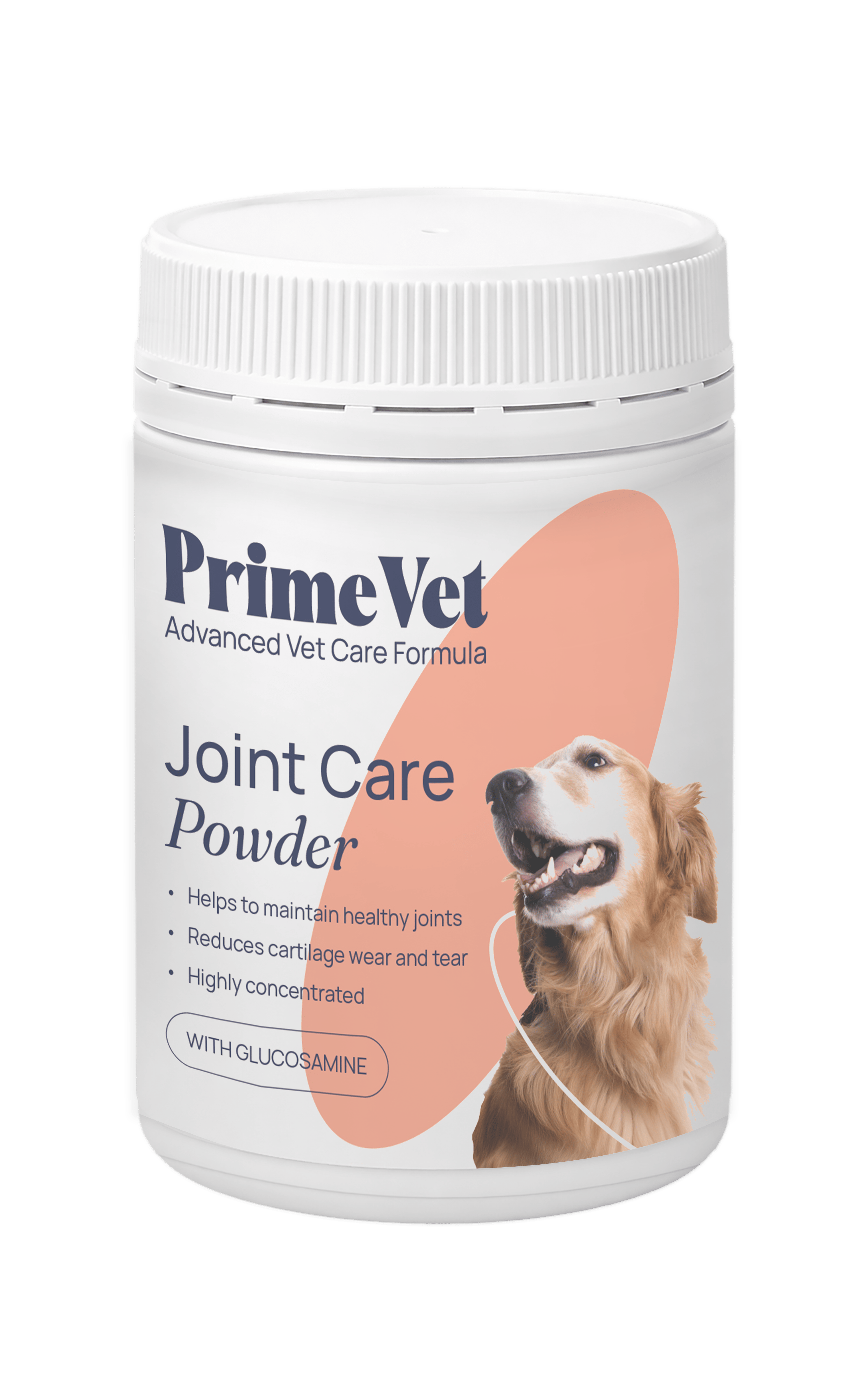
PrimeVet™ Joint Care Powder 150g →
A workable routine.
- Start low. Begin at the lower end of the label recommendation for your dog's weight for two weeks. This is the window in which mild gastrointestinal upset is most likely to show up.
- Hold for eight to twelve weeks. Joint tissue turns over slowly. Judging a supplement in a week tells you nothing, and stopping at three weeks tells you less.
- Measure three things, once a week. Morning stiffness, willingness to walk, and time to rise after rest. Score each out of five. Keep the scores in a note on your phone so you are comparing numbers rather than impressions.
- Review at twelve weeks. If there is no measurable change, the supplement is not earning its place in the bowl. Either stop it or discuss an alternative with your vet, do not simply double the dose.
Small dogs and large dogs differ far more by body weight than by breed. Follow the label by weight, and ask your vet if your dog is on other medication, on a prescription diet, or has kidney disease.
How collagen compares with the other joint ingredients. Collagen is rarely the only thing in a joint formula, and owners deserve to know what the neighbours are doing. Glucosamine and chondroitin are the most studied pair in dogs and are usually the backbone of a veterinary joint diet.
Mobility care beyond the scoop. Supplementation works best when it is not the only change. Keep nails trimmed, because long nails alter posture and load. Maintain a healthy weight, because every extra kilogram loads the joints on every step. Offer non-slip flooring on tiles and timber. Swap long weekend walks for shorter daily ones. Ask your vet about a rehabilitation assessment if your dog is favouring a limb.
The WSAVA global nutrition guidelines are a solid reference for building a balanced diet around any supplement.
How to Choose the Best Collagen for Dogs
The best collagen for dogs is one with a clear type, a stated dose, and a manufacturer willing to tell you where it is made. Everything else is marketing.
We built our own range around that principle. Our PrimeVet™ Joint Care Powder 150g combines collagen with glucosamine, chondroitin sulphate, MSM, hyaluronic acid and a full amino acid complex, formulated by Professor David Evans BVSc PhD and our veterinary nutritionists. It costs $79.95 for a 30-day supply.
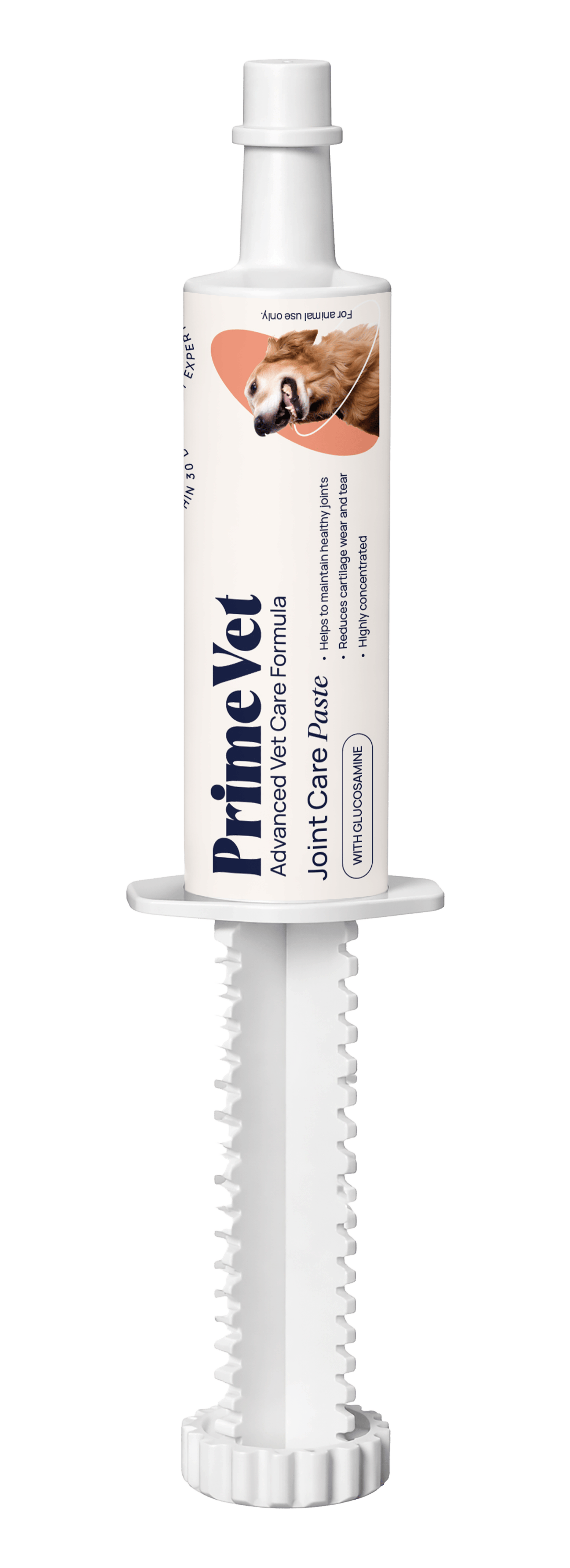
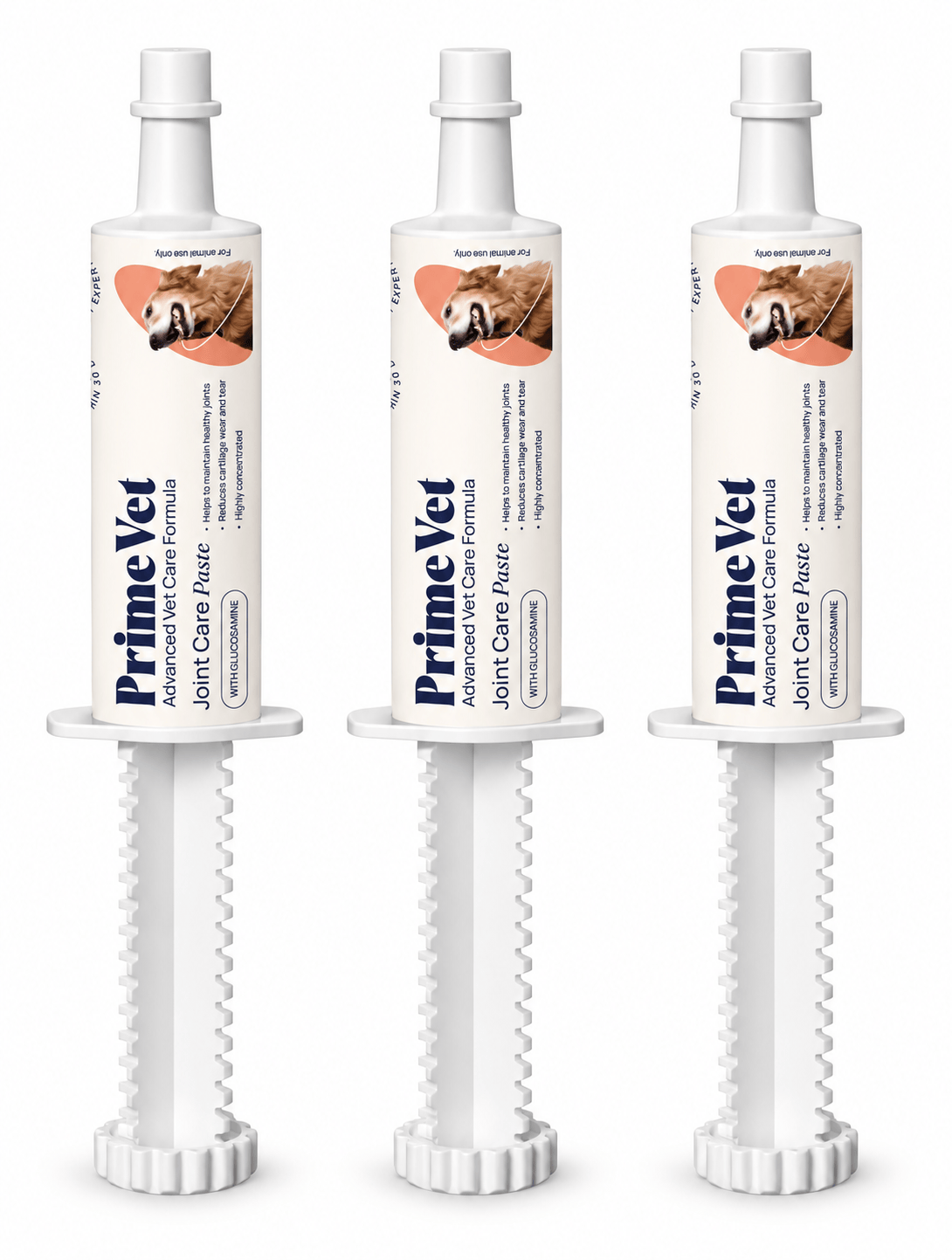
For dogs that will not take powder, the PrimeVet™ Joint Care Paste for Dogs 60ml delivers the same concentrated formula in a paste at $59.95.
Use this checklist before you buy anything:
- Is the collagen type stated on the label?
- Is the dose given per kilogram of body weight?
- Are there supporting nutrients, or collagen alone?
- Is the manufacturer named and contactable?
- Is there a batch number and best-before date?
- Does the formula suit your dog's size and appetite?
Collagen-Rich Foods for Dogs and Other Joint-Support Ingredients
Collagen-rich foods for dogs include bone broth, skin-on poultry, and connective tissue from slow-cooked meat. These are useful additions to a balanced diet, but they are inconsistent in dose and should not replace a formulated supplement.
Other ingredients earn their place alongside collagen:
- Glucosamine and chondroitin: the most studied joint pair in dogs
- MSM: a sulphur source used in joint formulas
- Hyaluronic acid: supports joint fluid viscosity
- Omega-3 fatty acids: support the body's normal inflammatory response
- Turmeric: a traditional botanical for comfort after activity
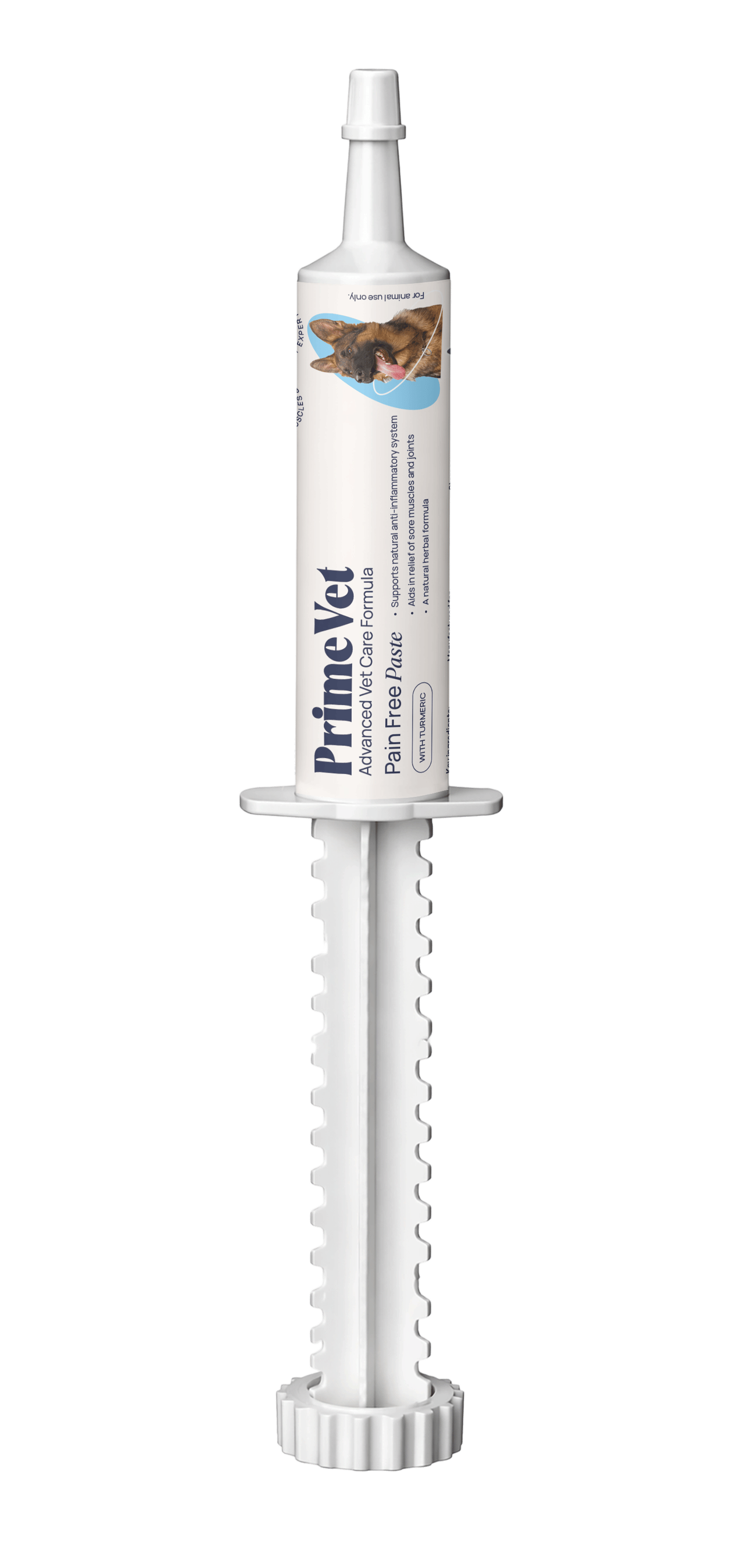
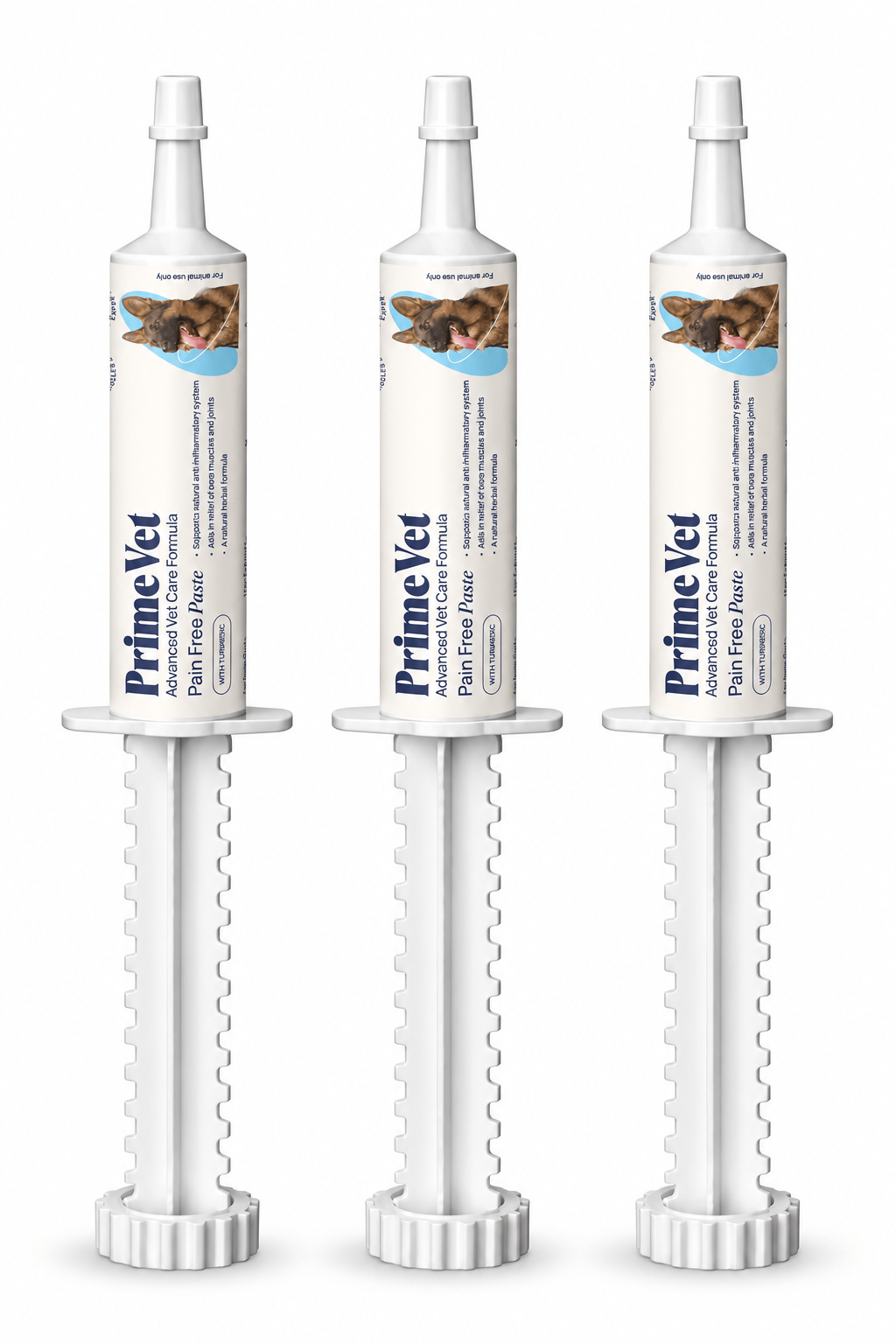
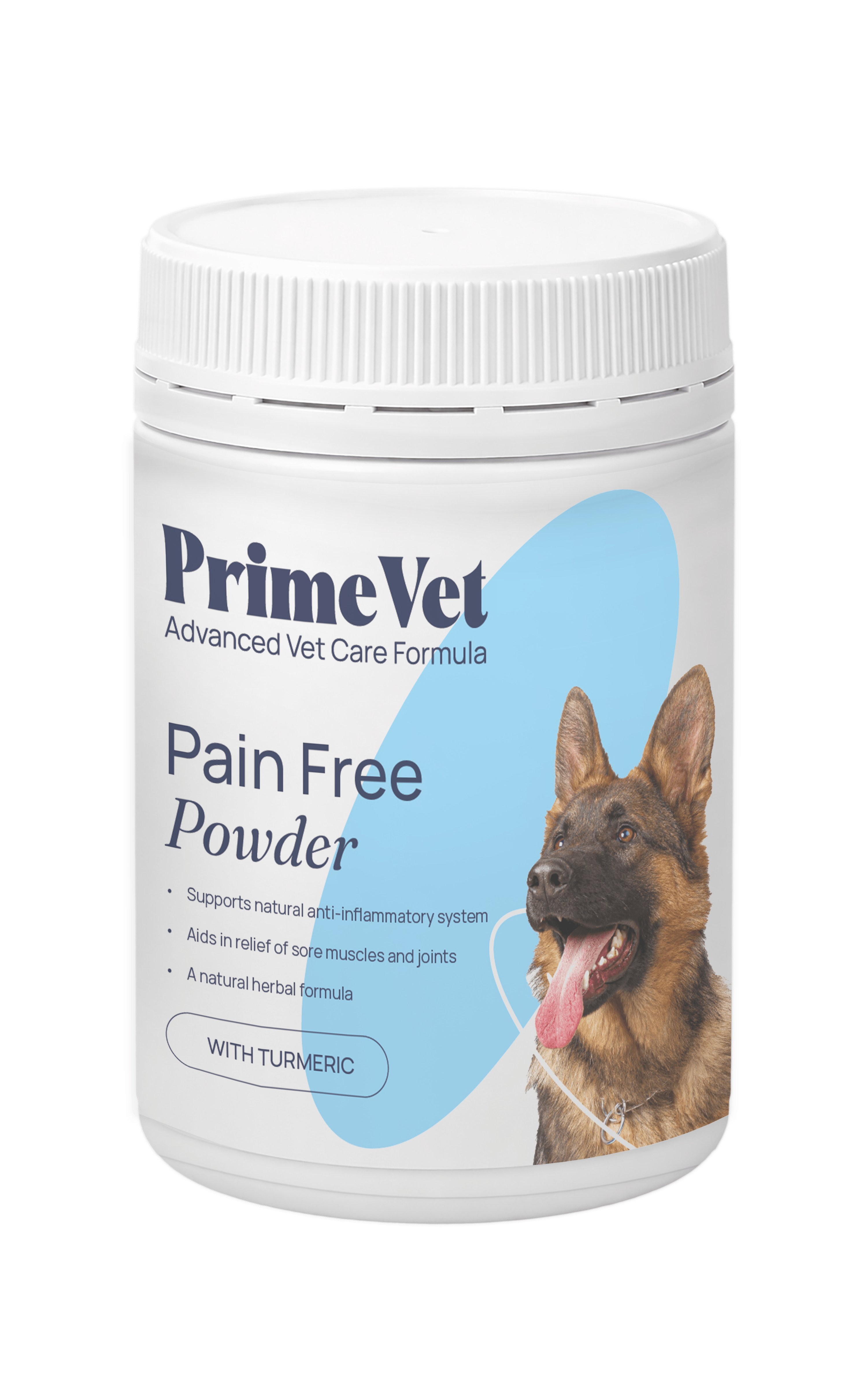
Our PrimeVet™ Pain Free Powder for Dogs 150g at $134.95 takes the botanical route, blending turmeric, celery, skullcap, passiflora, magnolia bark and Jamaican dogwood for dogs that need comfort support around activity.
Mobility care beyond supplements matters just as much. Keep nails trimmed. Maintain a healthy weight, because every extra kilo loads the joints. Offer non-slip flooring. Swap long weekend walks for shorter daily ones.
The WSAVA global nutrition guidelines are a solid reference for building a balanced diet around any supplement.
Frequently Asked Questions
Do dogs lose collagen as they age?
Yes. Collagen production naturally declines with age, which is one reason senior dogs often show stiffer movement and slower recovery after exercise. This decline affects cartilage, tendons and ligaments, all of which rely on collagen for structure and resilience. While you cannot stop the ageing process, supporting your dog's diet with collagen and other joint nutrients can help maintain comfort and daily function. If your dog is slowing down, a vet check is the first step before adding any supplement.
How long does collagen take to support a dog's joints?
Most owners report noticing changes after four to eight weeks of consistent daily use, though this varies with the dog's age, condition and overall diet. Collagen is not a painkiller, so it works gradually by supplying building blocks for connective tissue. Keep a simple diary of walks, stairs and play to track changes objectively. If you see no improvement after three months, speak to your vet about whether collagen is the right fit or whether other joint-support ingredients should be added.
Is collagen safe for dogs, and are there any side effects?
Collagen is generally well tolerated in dogs when given at appropriate doses. Some dogs may experience mild digestive upset such as loose stools when starting a new supplement, so introduce it gradually over a week. Avoid products with added sugars, xylitol or unnecessary fillers. If your dog has a diagnosed condition or is on medication, check with your vet first. Choosing a product with clear ingredient labelling and a known manufacturer makes it easier to judge quality and safety.
Can collagen help dogs with arthritis?
Collagen can support joint comfort and cartilage maintenance, but it is not a treatment for arthritis itself. Dogs with arthritis benefit most from a combined approach: veterinary care, weight management, appropriate exercise and a supplement that includes collagen alongside glucosamine, chondroitin and MSM. Products such as PrimeVet Joint Care Powder combine these ingredients to help reduce inflammation and support daily mobility. Always discuss arthritis management with your vet before changing your dog's routine.
Joint problems rarely improve on their own, and the dogs that do best are the ones whose owners act early and stay consistent. At Farrell's and PrimeVet, we have supported generations of owners, breeders and trainers since 1953 with formulas built on veterinary science, small-batch production and 100% natural ingredients. Start with our PrimeVet™ Joint Care range and give your dog the daily support that keeps them moving.


Leave a comment
All comments are moderated before being published.
This site is protected by hCaptcha and the hCaptcha Privacy Policy and Terms of Service apply.