

Table of Contents
- Why Veterinary Formulated Supplements for Horses Are Not All Equal
- How to Tell If Your Horse Actually Needs a Supplement
- Horse Vitamin and Mineral Supplements: Reading Forage and Feed Analysis
- Equine Joint Supplements: What the Evidence Supports
- Horse Supplements for Older Horses: Changing Needs After 15
- What 'Veterinary Formulated' Actually Means on a Label
- Equine Supplement Feeding Guide: Dosage, Safety and Interactions
- Conclusion
- Frequently Asked Questions
Last Updated: October 18, 2026
Why Veterinary Formulated Supplements for Horses Are Not All Equal
Veterinary formulated supplements for horses occupy a crowded shelf, and the label on the tub tells you far less than the marketing suggests.
The difference usually comes down to three things: how much of each nutrient is actually present, whether the form is absorbable, and whether anyone with clinical training set the dose.
This guide walks through how to judge a real dietary need, read a feed analysis, weigh the evidence behind joint and mineral products, and feed safely.
How to Tell If Your Horse Actually Needs a Supplement
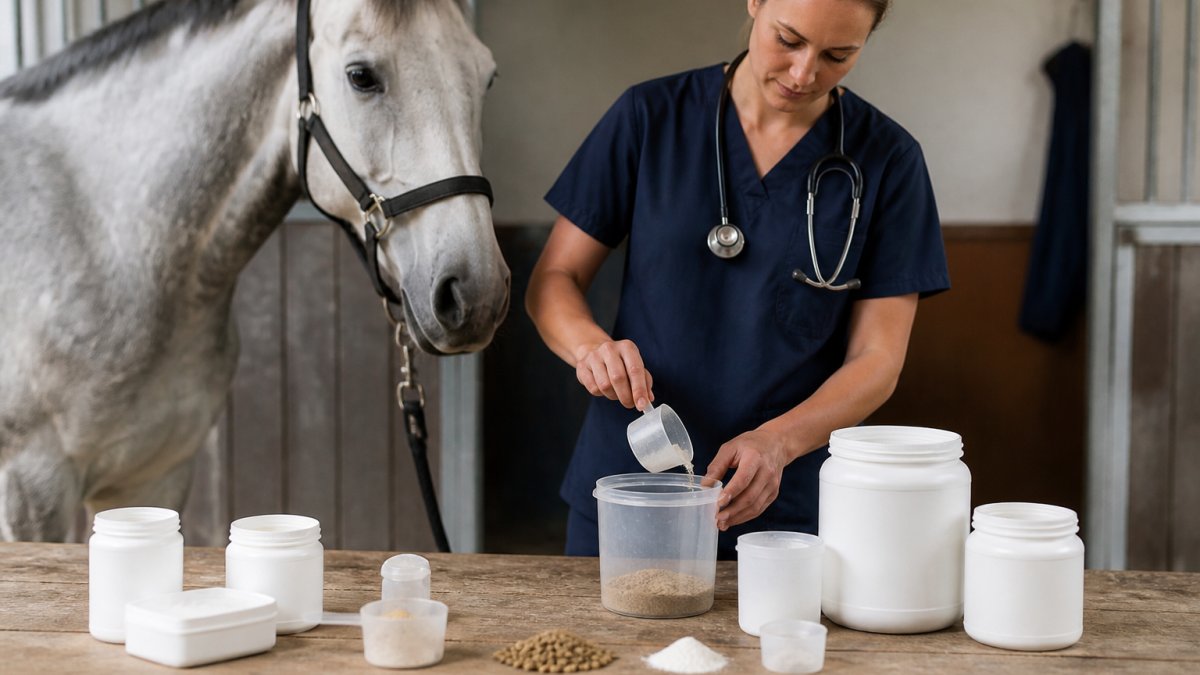
Start with the ration, not the catalogue. Most horses on good pasture or quality hay with a balanced hard feed already meet their needs, and adding products on top simply raises the cost of the diet.
Work through this sequence before you spend anything:
- Body condition score. Assess ribs, crest and rump monthly. Unexplained change warrants a vet call, not a supplement.
- Forage quantity and quality. Weigh hay rather than guessing. A horse eating poor hay is short on energy and protein before it is short on anything exotic.
- Feed analysis. A hay or pasture test tells you what is genuinely missing. Without it, you are guessing.
- Workload. A spelling horse and a horse in full training have different requirements.
A useful rule: if you cannot name the specific nutrient you believe is deficient and why, you are not ready to buy.
Horse Vitamin and Mineral Supplements: Reading Forage and Feed Analysis
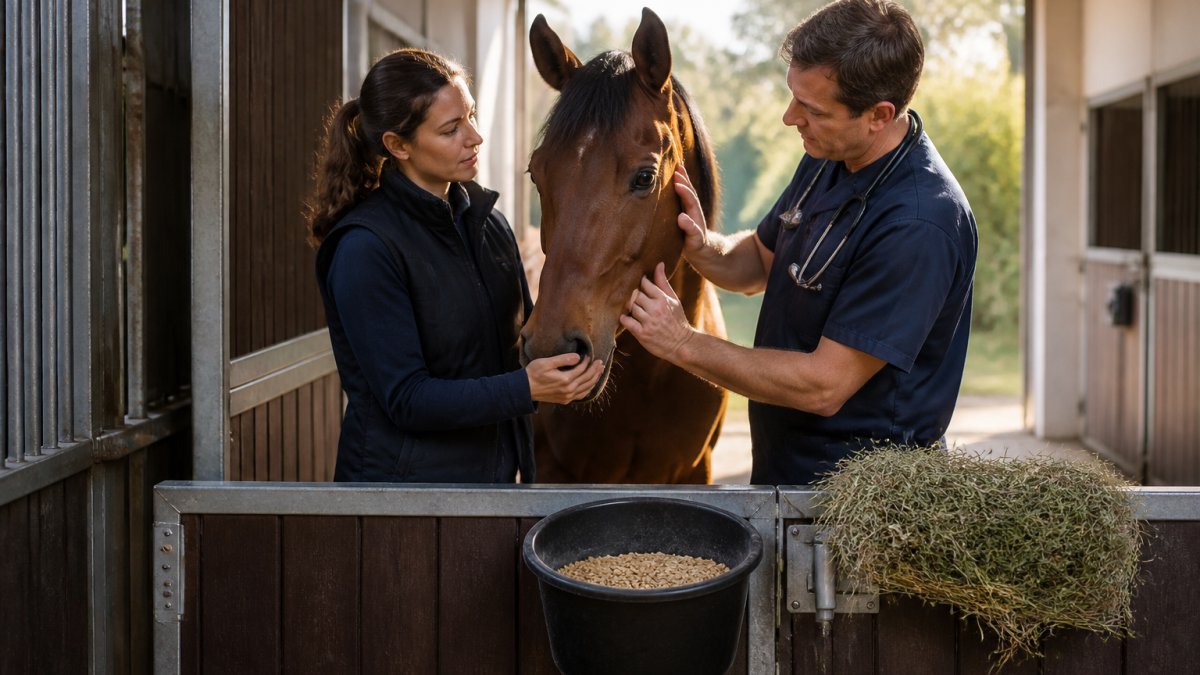
Horse vitamin and mineral supplements exist to fill gaps, and the only reliable way to find a gap is to test the forage.
When you read a feed analysis, focus on these figures:
- Dry matter - the baseline for every other number.
- Crude protein - adequacy for the horse's age and workload.
- Digestible energy - whether the forage can carry the work.
- Macro minerals - calcium, phosphorus, magnesium and the calcium-to-phosphorus ratio.
- Trace minerals - copper, zinc, selenium and iodine, where imbalances cause real harm.
The Australian feed and pasture testing guidance from state agriculture departments is a sensible starting point for interpreting results, and a nutritionist can translate the report into a ration. Matching the mineral profile to the analysis beats buying the biggest tub.
Equine Joint Supplements: What the Evidence Supports
Equine joint supplements are the largest and least regulated part of the market.
Here is what the main ingredients actually do, and what to look for on a label:
- Glucosamine - a precursor for glycosaminoglycans in cartilage. Common forms are glucosamine hydrochloride and glucosamine sulfate; the sulfate form is more often used in equine studies. Oral bioavailability in horses is low and variable, so dose matters more than the presence of the word on the tub.
- Chondroitin sulfate - often paired with glucosamine. Molecular weight affects absorption; low-molecular-weight chondroitin is generally preferred. Look for a stated percentage purity, not just a milligram figure.
- MSM (methylsulfonylmethane) - a sulfur donor. Evidence in horses is limited but it is widely used and generally well tolerated at label doses. It is one of the few joint ingredients where the effective dose range is fairly consistent across products.
- Hyaluronic acid - oral forms are marketed for joint lubrication. The molecule is large and oral absorption is poor; intravenous hyaluronic acid is a veterinary treatment, not a supplement, and should not be confused with an oral product.
- Herbal and marine extracts - green-lipped mussel, boswellia, curcumin and rosehip appear frequently. Evidence is mixed and product-to-product variation is high, so a named extract with a standardised marker compound is more useful than a generic listing.
What we look for is straightforward: a named inclusion rate, a form with reasonable bioavailability, and a manufacturer willing to explain the dose.
Where a horse has genuine joint disease, supplementation sits alongside veterinary management, not in place of it. Weight control, appropriate exercise and farriery do more for a stiff horse than any single powder.
This is where formulation credentials matter.
Horse Supplements for Older Horses: Changing Needs After 15
Horse supplements for older horses address a genuinely different set of problems. From the mid-teens onward, digestive efficiency tends to decline, muscle tone drops, and dental wear makes chewing long fibre harder.
The priorities shift accordingly:
- Digestive support. Older horses often do better on softer, more digestible fibre sources, with probiotics and yeast cultures supporting hindgut function.
- Protein quality. Maintaining top line needs good quality protein, not just more bulk.
- Joint and mobility support. Wear accumulates, so comfort becomes a daily consideration.
- Muscle support. Senior horses lose condition faster when out of work.
- Regular monitoring. Weight, teeth and bloodwork should be checked more often.
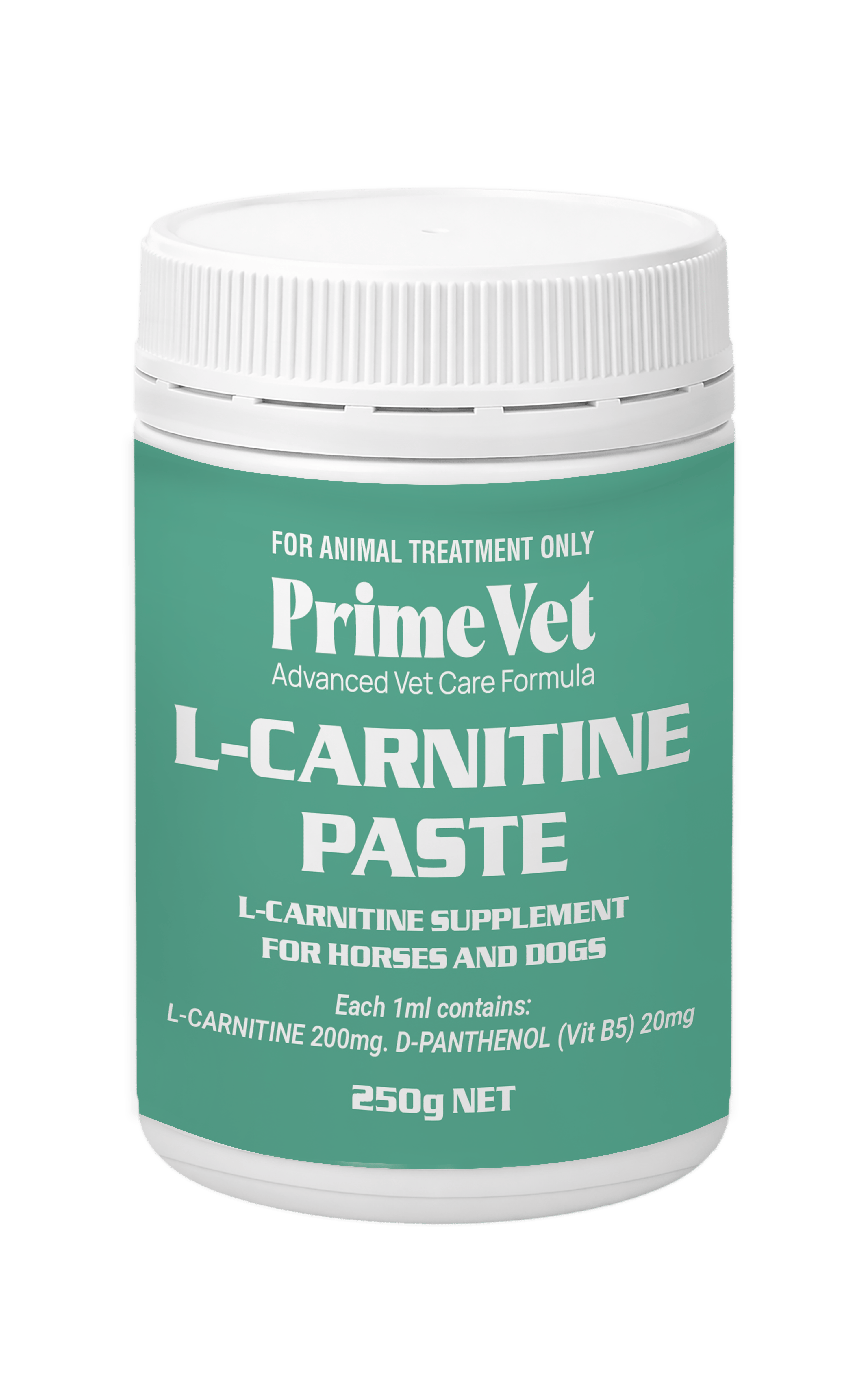
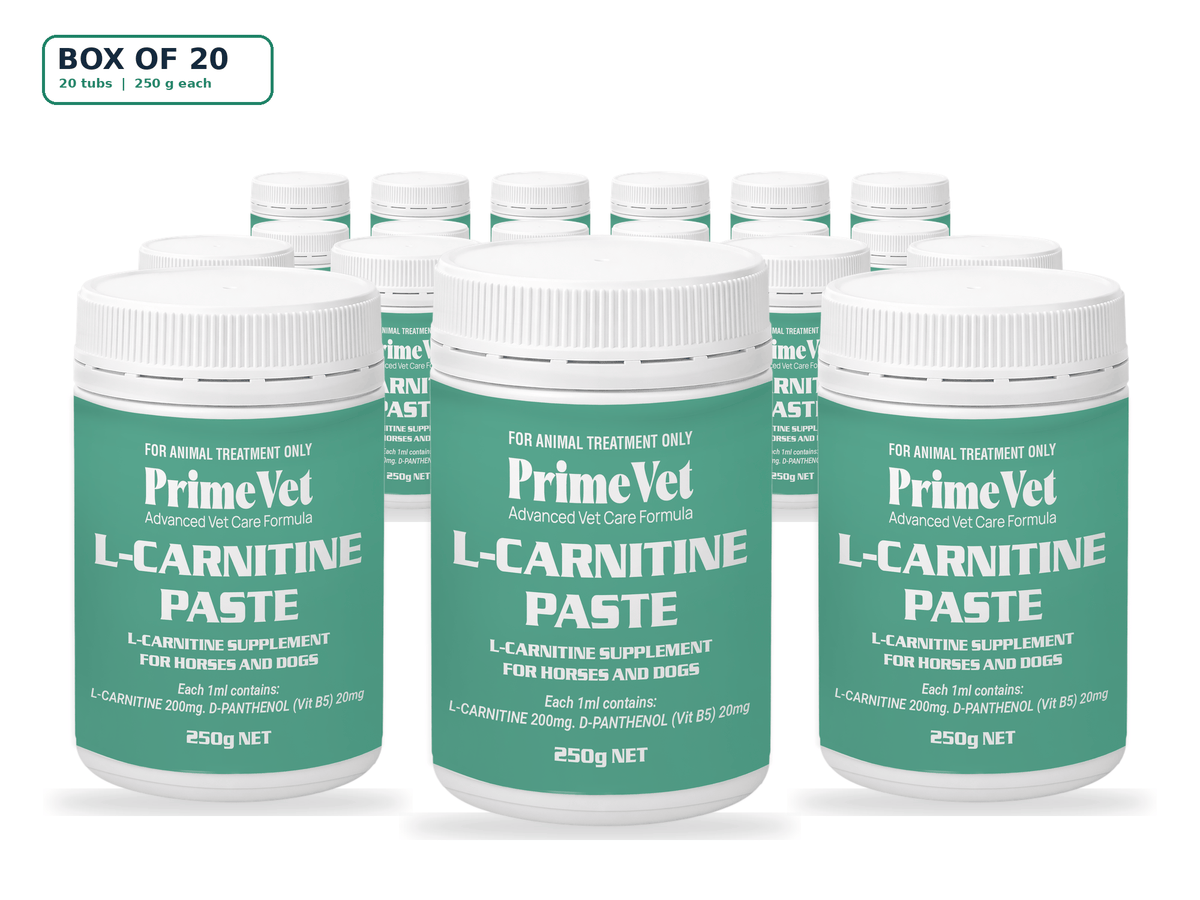
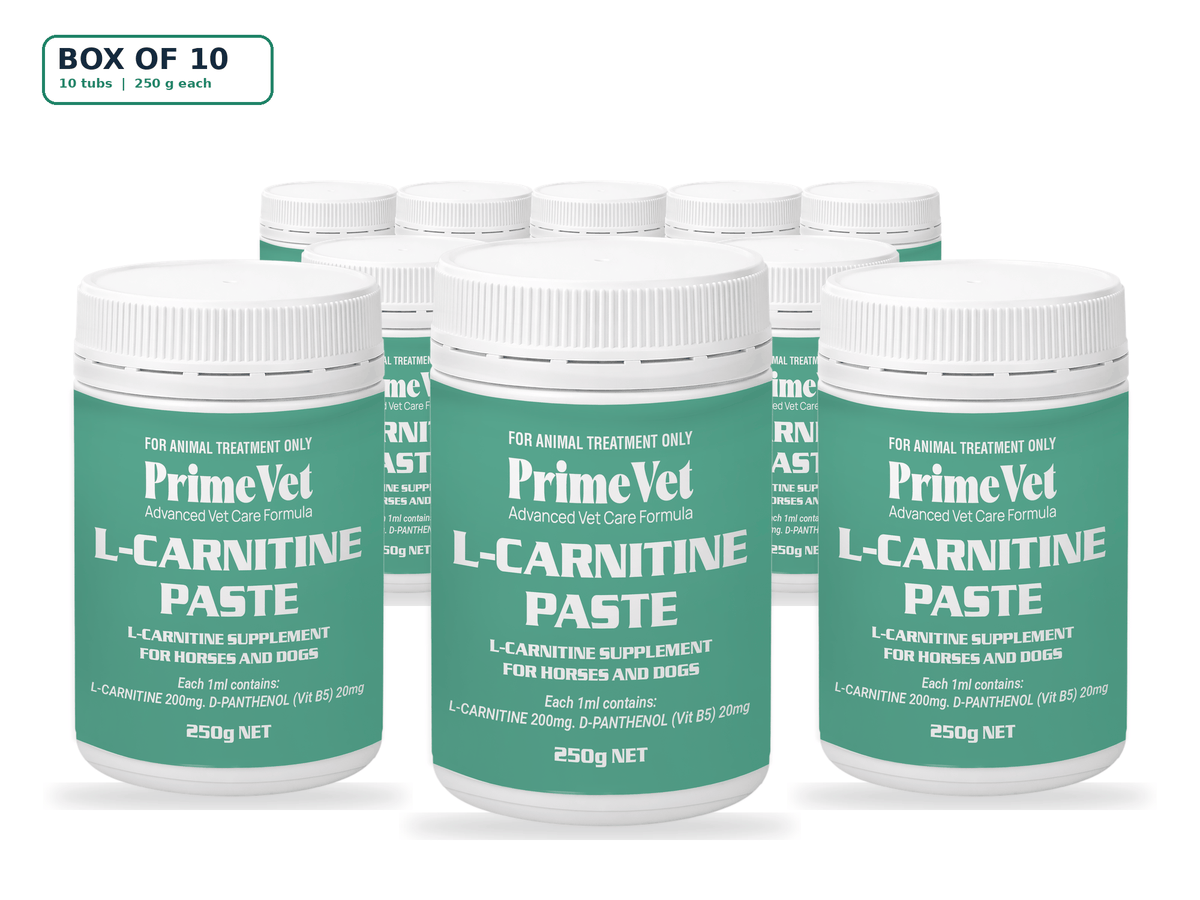
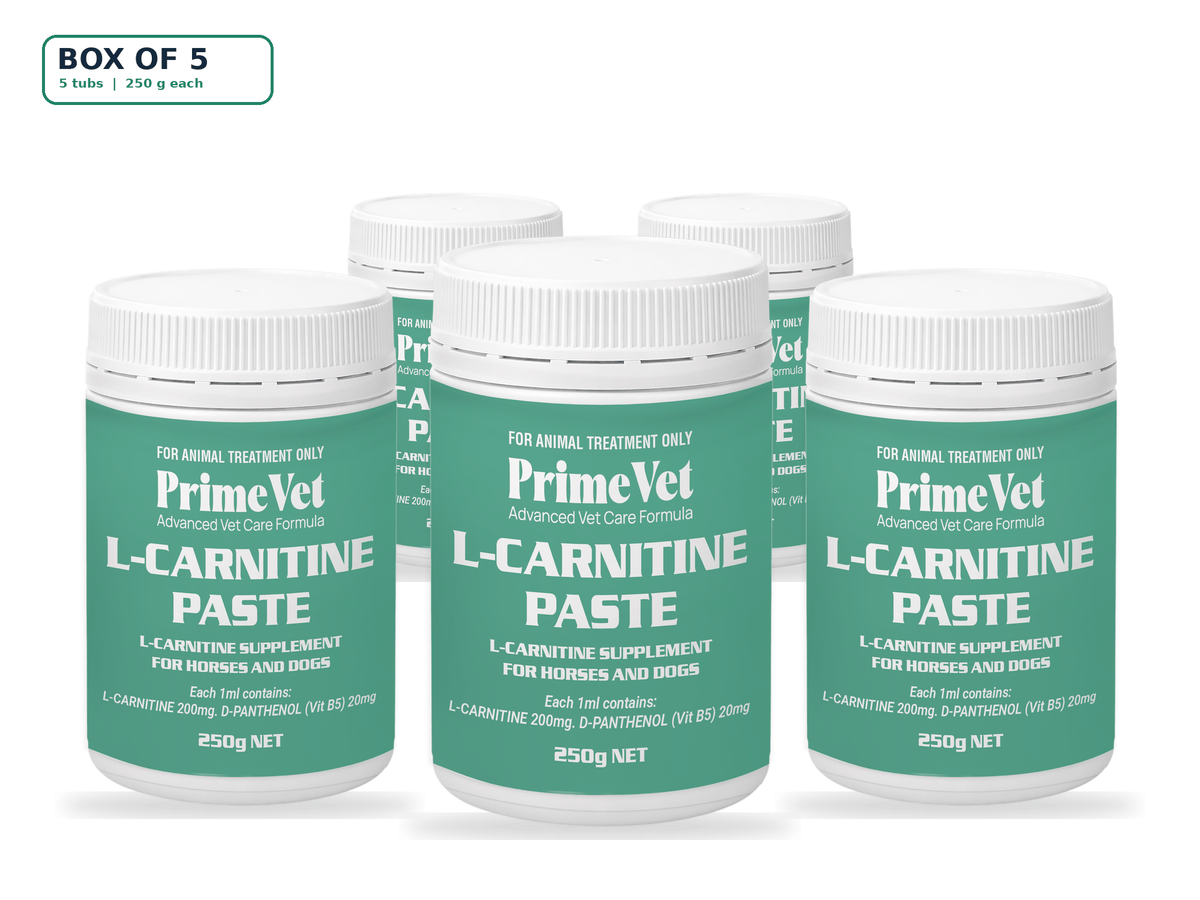
For performance animals moving into their later years, we stock the PrimeVet™ L-Carnitine Paste for Horses and Dogs 250g at $179.00. Each 1 mL delivers 200 mg of L-Carnitine plus 20 mg of D-Panthenol, formulated to support energy metabolism, healthy muscle function and post-exercise recovery during training and competition.
PrimeVet™ L-Carnitine Paste for Horses and Dogs 250g →
What 'Veterinary Formulated' Actually Means on a Label
"Veterinary formulated" is a claim, not a regulated standard. No authority inspects a tub and certifies that a veterinarian wrote the formula, so the phrase means whatever the manufacturer intends it to mean.
That does not make it worthless. It means you have to verify it. Ask three questions:
- Who formulated it? A named veterinarian or nutritionist with credentials you can check is worth more than an anonymous "team of experts".
- What evidence sits behind it? Look for stated inclusion rates and any trial data.
- Who manufactures it? Small-batch production with traceable ingredients is easier to stand behind than anonymous bulk blending.
We are comfortable being held to that standard. Our products are made in small batches, formulated with veterinary and nutritional input, and backed by a brand history reaching back to 1953.
Equine Supplement Feeding Guide: Dosage, Safety and Interactions
An equine supplement feeding guide matters more than most owners realise, because more is not better. Several nutrients commonly found in equine products have real upper limits, and stacking multiple supplements can quietly exceed them.
Dose by body weight, not by scoop
Most labels give a dose range for a "typical" 500 kg horse. A 650 kg warmblood and a 350 kg pony should not receive the same scoop. Weigh the horse or use a weight tape, then scale the label dose accordingly. Where a product gives a single dose with no weight range, treat that as a warning sign rather than a convenience.
Product forms change the maths
Powders and granules are the most common form and are easiest to adjust, but they settle and separate in the tub, so mix thoroughly before feeding. Liquids dose accurately with a syringe but are harder to hide in feed and can be refused by fussy horses. Pastes are useful for short-term or targeted use but are expensive per day and not designed for long-term feeding.
Stacking: a worked example
Suppose a horse is on a broad-spectrum mineral mix, a joint supplement and a calming product. Read every label and add the selenium, zinc and copper totals before feeding. A common pattern is that two products each supply a portion of the daily selenium requirement, and the combined total exceeds it. The same applies to zinc and copper, which compete for absorption, and to calcium, which can interfere with other minerals if over-supplied.
Safety and interactions
- Feed to label directions unless a vet advises otherwise, and adjust for body weight.
- Read every label in the ration. If two products both supply selenium or zinc, add the totals before feeding.
- Introduce one product at a time over seven to ten days so you can attribute any change.
- Watch for interactions. Mineral absorption is affected by other minerals, and excessive calcium can interfere with others.
- Record what you feed. A simple log makes it easy to spot what worked.
Horses with metabolic conditions, kidney concerns or on medication should have any new supplement cleared by their vet. Pregnant mares and youngstock deserve the same caution. Some ingredients, including certain herbal extracts, can interact with medication, so bring the label to the vet appointment rather than describing the product from memory.
Monitoring and knowing when to stop
Set a baseline before you start: body condition score, a short video of the horse moving, and notes on appetite, manure and behaviour. Review at four to six weeks. If there is no measurable change, the supplement is not earning its place in the ration - stop it and reassess the diet. If there is improvement, keep a written record so you can tell later whether the effect holds.
Conclusion
Getting supplementation right is less about finding the strongest product and more about knowing what your horse is actually short of. Test the forage, watch body condition, involve your vet, and demand evidence from the label.
That is the standard we build to at Farrell's and PrimeVet. Our range is developed with veterinary scientists and nutritionists, produced in small batches, and backed by a heritage stretching back to 1953.
Frequently Asked Questions
What should I look for in a veterinary formulated horse supplement?
Look for a named formulator with veterinary qualifications, a full ingredient list with amounts per dose, and feeding directions that state a dose range by bodyweight. Check whether the product names the condition it supports and whether claims are specific rather than vague.
Can horses get all the nutrients they need from forage and feed?
Not always. Pasture and hay vary widely in nutrient content depending on season, soil and species, and hay cut late loses quality. A forage analysis is the only reliable way to know what your horse is actually eating. Where a deficiency shows up, horse vitamin and mineral supplements can fill the gap. But adding supplements without a baseline risks oversupply, so test first and adjust the ration rather than guessing.
How should I introduce a new supplement to my horse's diet?
Start at half the stated dose for seven to ten days, then move to the full amount if there is no loose manure, feed refusal or behaviour change. Split the dose across feeds where possible. Keep a simple record of what you changed and when, so you can link any reaction to the new product. If your horse is on medication or has a diagnosed condition, confirm the product with your vet before the first feed.
Should I ask a veterinarian before giving my horse a supplement?
Yes, particularly for older horses, performance horses on multiple products, or any horse with a diagnosed condition. Your vet can check for interactions with medication, confirm whether a deficiency is likely, and advise on upper limits for nutrients such as selenium. A brief conversation costs far less than treating an oversupply problem. Bring the product label so the vet can see exact amounts per dose.
Choosing supplements does not have to be a guessing game, but it does require discipline. Start with a feed analysis, set a clear goal, and buy only what closes a verified gap. Farrell's and PrimeVet can help with products built on veterinary input, small-batch quality and decades of experience, including our L-Carnitine Paste for performance horses and targeted joint and mineral support. Get started with Farrell's and PrimeVet and give your horse nutrition you can trace.



Leave a comment
All comments are moderated before being published.
This site is protected by hCaptcha and the hCaptcha Privacy Policy and Terms of Service apply.