

Table of Contents
- Why Large Dogs Need a Different Glucosamine Dosage
- Glucosamine Dosage for Dogs by Weight: A Practical Chart
- How to Read a Joint Supplement Label and Calculate the Dose
- Glucosamine Side Effects in Dogs: What to Watch For
- How Long Does Glucosamine Take to Work in Dogs?
- Dog Glucosamine Overdose Symptoms and What to Do Next
- Getting the Dosage Right: Practical Tips and Product Choices
- Conclusion
- Frequently Asked Questions
Last Updated: October 16, 2026
Why Large Dogs Need a Different Glucosamine Dosage
A Great Dane and a Jack Russell can take the same joint supplement. They cannot take the same amount of it.
Body weight drives the dose, not breed.
At Farrell's and PrimeVet, we have formulated joint supplements for dogs since 1953, and the question we hear most often is a simple one: how much is enough, and how much is too much?
Glucosamine Dosage for Dogs by Weight: A Practical Chart
The chart below gives a practical daily range for glucosamine hydrochloride or glucosamine sulphate in dogs. These are general starting ranges based on body weight, and your vet should confirm the right level for your dog.
| Body Weight | Daily Glucosamine (Loading) | Daily Glucosamine (Maintenance) |
|---|---|---|
| 5-10 kg | 500 mg | 250-500 mg |
| 10-20 kg | 750-1,000 mg | 500-750 mg |
| 20-35 kg | 1,000-1,500 mg | 750-1,000 mg |
| 35-50 kg | 1,500-2,000 mg | 1,000-1,500 mg |
| 50 kg+ | 2,000-2,500 mg | 1,500-2,000 mg |
Loading Phase vs Maintenance Phase
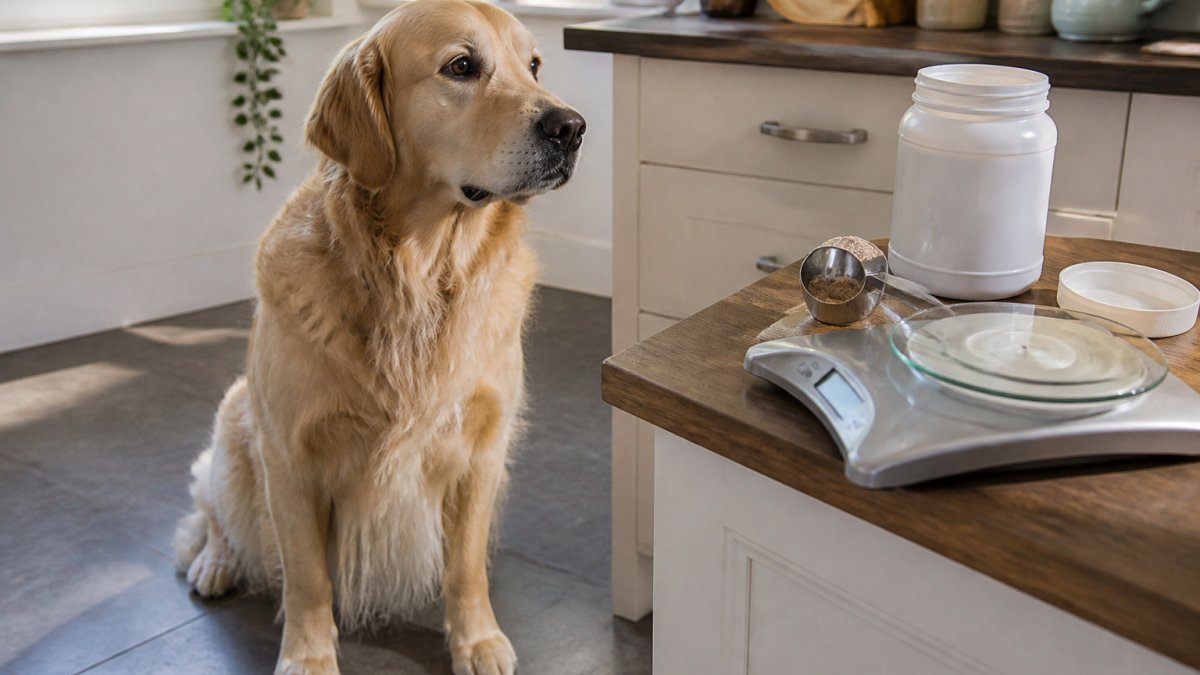
A loading phase means giving a higher dose for the first few weeks to build up levels in the body. A maintenance phase follows, using a lower dose to hold that level steady.
Many owners skip the loading phase and wonder why nothing changes. Others stay on loading doses for months, which wastes product and raises the risk of stomach upset.
Dosing Large and Giant Breeds Safely
Giant breeds need the upper end of each range, but they also need slower increases. Start at the low end of the loading range for two weeks. If your dog tolerates it well, move to the full loading dose.
Watch for loose stools or reduced appetite. If either appears, drop back to the previous dose for a week before trying again.
How to Read a Joint Supplement Label and Calculate the Dose
The number that matters on a joint supplement label is the amount of active ingredient per gram, per millilitre or per scoop, not the total weight of the tub. A 150 g jar tells you nothing about dose until you read the panel. This is the single most common source of dosing error we see, because owners match the tub size to their dog's size instead of matching the active ingredient to their dog's weight.
Step-by-Step: Working Out the Dose
Here is how we would work it out for a 40 kg Labrador on a powder that lists glucosamine hydrochloride at 500 g/kg:
- Find the glucosamine concentration. It will be listed as g/kg, mg/g, mg per scoop or mg per tablet. In our example, 500 g/kg means 500 mg of glucosamine per gram of powder.
- Find your dog's weight category in the chart above. For 40 kg, the loading target is roughly 1,500-2,000 mg per day.
- Divide your target daily dose by the concentration. 1,750 mg ÷ 500 mg/g = 3.5 g of powder per day.
- Check the scoop size. If the supplied scoop holds 2 g, that is 1.75 scoops, round to the nearest practical measure and split across two meals.
- Confirm the salt form. Glucosamine hydrochloride and glucosamine sulphate are not interchangeable by weight (see below).
- Check what else is in the blend. Combination products dilute the glucosamine, so the same scoop delivers less active ingredient.
Hydrochloride vs Sulphate: Why the Number on the Label Is Not the Whole Story
Glucosamine hydrochloride typically contains around 83% elemental glucosamine, while glucosamine sulphate (as the common stabilised salt) contains roughly 65% elemental glucosamine. That means 1,000 mg of glucosamine sulphate delivers less actual glucosamine than 1,000 mg of the hydrochloride form. If you switch between the two without adjusting, you can quietly change your dog's effective dose by a meaningful margin.
Combination Products: Chondroitin, MSM and Others
Combination supplements add chondroitin, MSM, hyaluronic acid and sometimes collagen or green-lipped mussel alongside glucosamine. These extras support cartilage, joint lubrication and comfort, but they do not change the glucosamine dose your dog needs. Two practical consequences follow:
- A combination chew may contain less glucosamine per unit than a single-ingredient powder, so you may need more of it to hit the same target.
- The extras carry their own tolerability profile. Chondroitin and MSM are generally well tolerated, but some dogs react to a specific ingredient rather than to glucosamine itself.
If your dog reacts to a combination product, switching to a single-ingredient glucosamine source can help you work out which component is responsible.
A Note on Our Own Products
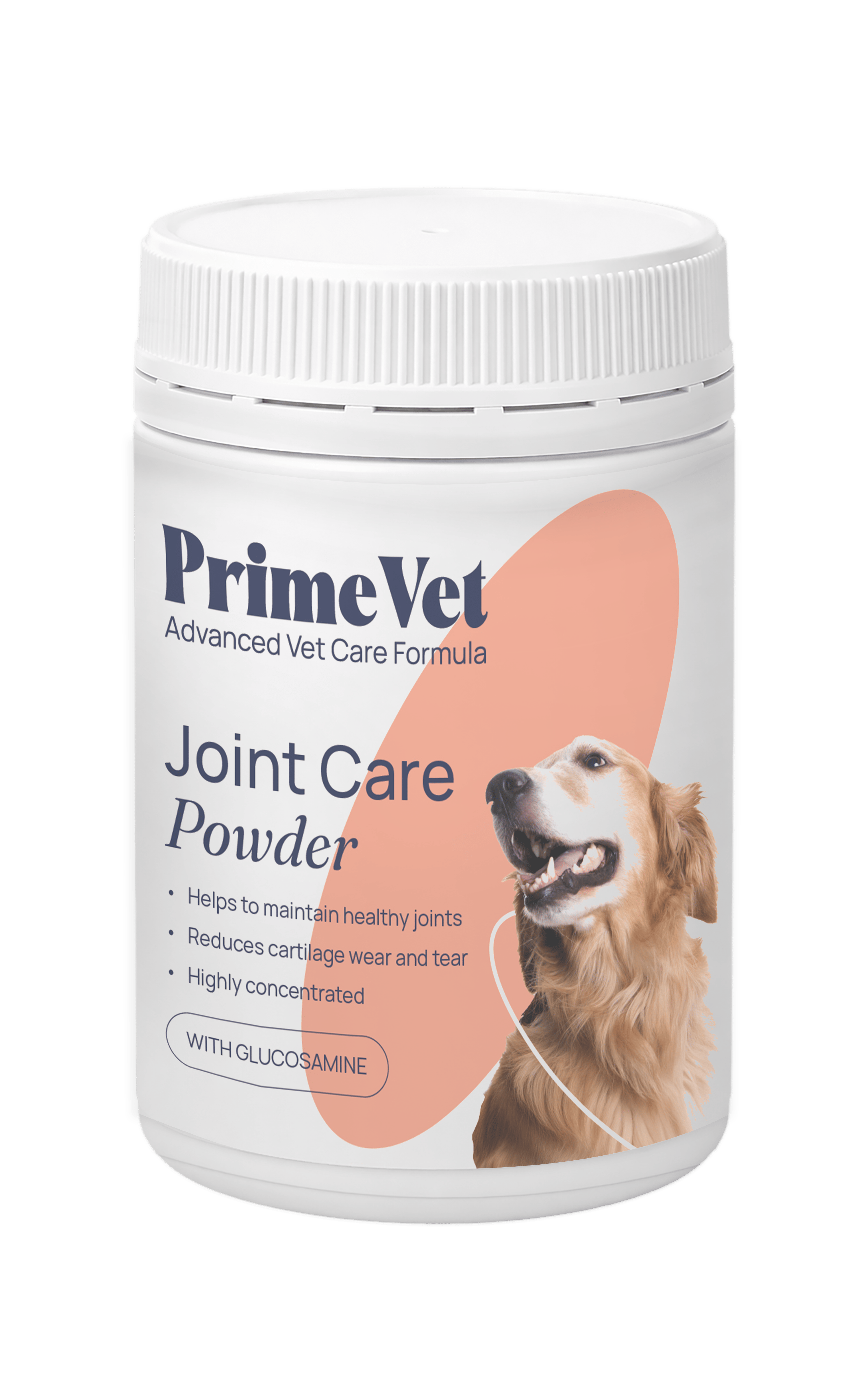
For transparency, PrimeVet™ Joint Care Powder lists glucosamine at 553.2 g/kg, a high concentration, so a small scoop delivers a meaningful dose. Because it is a combination formula, the scoop weight and the glucosamine figure both matter when you calculate. Always follow the dosing guide on the specific product you buy rather than assuming all powders are equal.
Glucosamine Side Effects in Dogs: What to Watch For
Most dogs tolerate glucosamine well, and serious reactions are uncommon. The side effects that do appear are usually mild and linked to dose or to the other ingredients in a combination product. Understanding why they happen helps you decide whether to adjust, pause or call your vet.
Common, Usually Mild Signs
Watch for:
- Loose stools or diarrhoea
- Vomiting or reduced appetite
- Stomach gurgling or discomfort after meals
These signs typically track with dose. Glucosamine is an amino sugar, and a sudden jump in the amount reaching the gut can draw water into the stool and unsettle the stomach. That is why the loading phase should be stepped up gradually in large and giant breeds rather than started at the top of the range.
Condition-Specific Precautions
Dogs with a known liver or kidney condition need veterinary advice before starting any supplement, because these organs process what the body does not use. The same applies to dogs with diabetes or a history of bladder stones, since glucosamine is a sugar derivative and some formulations include additional sugars or flavourings. Dogs with a known allergy to shellfish should avoid glucosamine sourced from crustacean shells unless the label confirms a non-shellfish source.
Medication Interactions to Raise With Your Vet
Glucosamine is not known to cause dangerous interactions with common veterinary medicines, but a few situations warrant a conversation before you start:
PrimeVet™ Joint Care Powder 150g →
- Blood-thinning medication. Some evidence in human medicine suggests glucosamine may modestly affect clotting (Potential glucosamine-warfarin interaction resulting in increased international...). If your dog is on an anticoagulant, your vet may want to monitor more closely.
- Diabetes medication. Because glucosamine is a sugar derivative, dogs on insulin or oral hypoglycaemics should have their levels checked after starting.
- Non-steroidal anti-inflammatories (NSAIDs). These are commonly prescribed for arthritis, and many owners give glucosamine alongside them. The combination is widely used, but your vet should know both are in play so they can assess the whole regime.
- Other joint supplements. Stacking multiple products that each contain glucosamine, chondroitin or MSM can push the total dose above the intended level without you realising.
This is not a complete list, and it is not a substitute for veterinary advice. The practical rule is simple: if your dog is on any long-term medication or has any diagnosed condition, ring your vet before the first dose, not after.
A Simple Monitoring Plan
Rather than waiting for a problem, track a few things for the first two weeks:
- Appetite and stool consistency each day
- Energy level after meals
- Any change in drinking or urination
If side effects appear, stop the supplement and speak to your vet. Do not push through hoping the body adjusts. If signs settle within a day or two of stopping, that points to the supplement; if they persist, the cause may be something else and needs veterinary assessment.
How Long Does Glucosamine Take to Work in Dogs?
Glucosamine does not work like a painkiller. It supports joint tissue over time, so most owners see changes in four to eight weeks, and some dogs take longer.
Signs of improvement include:
- Easier movement after rest
- Willingness to climb stairs or jump into the car
- Less stiffness in the morning
- Longer walks without slowing down
If you see no change after eight weeks at a proper loading dose, the supplement may not be the right fit, or the issue may need veterinary treatment. Realistic expectations matter here.
Dog Glucosamine Overdose Symptoms and What to Do Next
An accidental overdose is rarely dangerous in dogs, but it can cause a miserable few hours. Symptoms of too much glucosamine include vomiting, diarrhoea, stomach pain and drooling.
If your dog has eaten a large amount:
- Remove the product from reach.
- Note how much was eaten and when.
- Call your vet or a pet poison helpline for advice.
- Watch for vomiting, weakness or wobbliness.
- Do not induce vomiting unless a vet tells you to.
Missed Doses and Accidental Double Doses
A missed dose is not a problem. Skip it and give the next dose at the normal time. Do not double up.
If you accidentally give two doses in one day, skip the next scheduled dose and return to normal the day after. If your dog seems unwell, ring your vet.
Getting the Dosage Right: Practical Tips and Product Choices
Getting the dose right comes down to three things: an accurate weight, a clear label, and consistency.
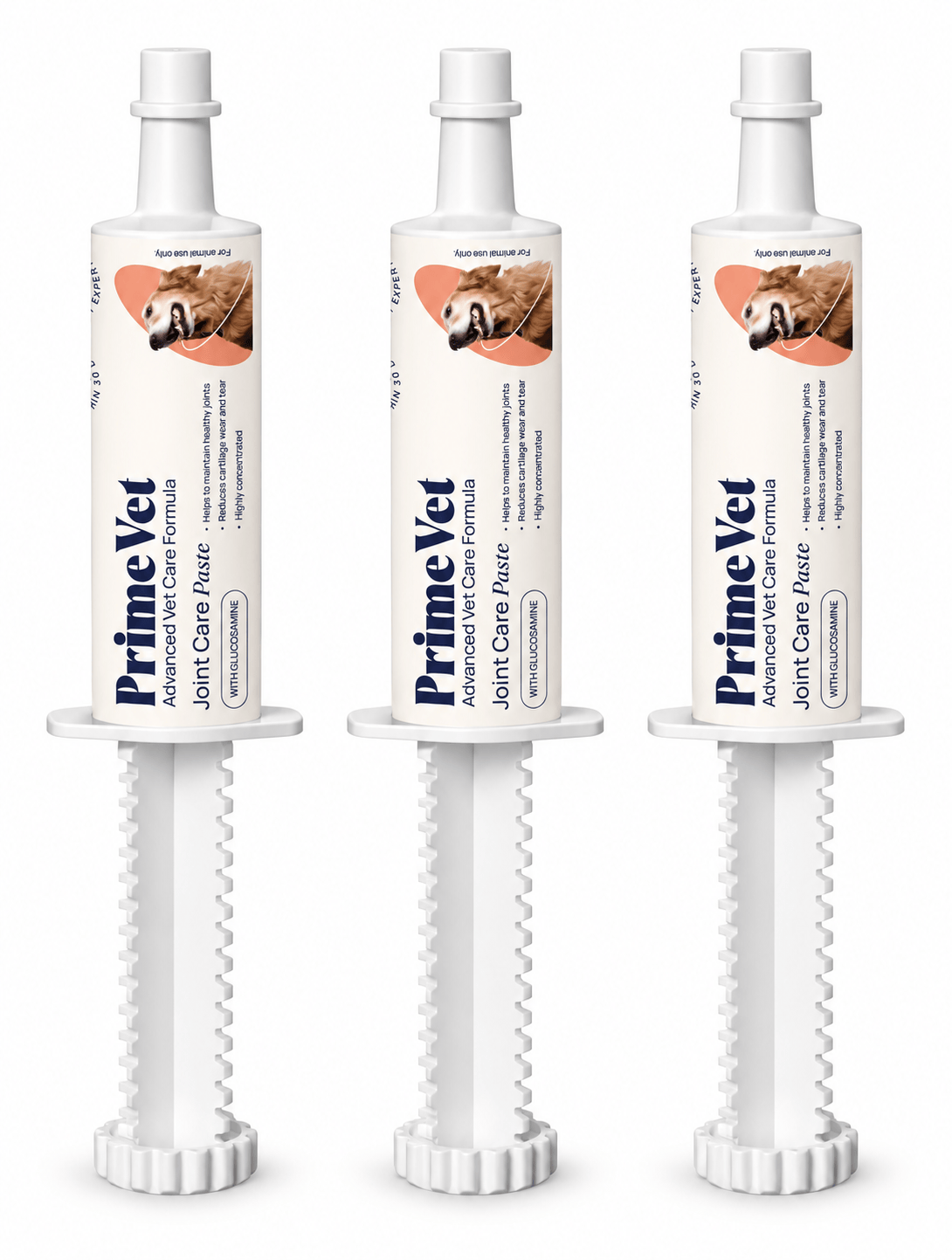
For owners who want a simple, concentrated option, our PrimeVet™ Joint Care Powder 150g delivers glucosamine alongside MSM, chondroitin sulphate, hyaluronic acid and collagen in a 30-day supply.
Whichever format you choose, check the concentration and dose to your dog's weight, not the picture on the tub.
Conclusion
Working out the safe glucosamine dosage for large dogs comes down to weight, concentration and patience. Get those three right and you give your dog the best chance of moving more comfortably.
If you want a supplement built on that principle, Farrell's and PrimeVet has formulated joint care for dogs since 1953, with glucosamine, chondroitin and collagen in small-batch products made by veterinary scientists.
Frequently Asked Questions
How much glucosamine should I give my large dog?
For a dog over 25 kg, a common starting range is 1,000 to 2,000 mg of glucosamine per day, adjusted for body weight. Check the product label for the active ingredient concentration and follow the manufacturer's weight-based guide. PrimeVet Joint Care Powder contains 553.2 g/kg glucosamine, so a 150 g jar provides roughly 83 g of glucosamine across a 30-day supply. Always confirm the dose with your vet if your dog has other health conditions.
What are the side effects of glucosamine in dogs?
Most large dogs tolerate glucosamine well. Some experience mild digestive upset such as loose stools, vomiting or reduced appetite, especially in the first week. These signs usually settle once the dose is split across meals. If your dog has a known liver or kidney condition, speak to your vet before starting, because glucosamine is processed by these organs and may need a lower dose or a different approach.
How long does glucosamine take to work in dogs?
Owners often notice small changes in mobility within two to four weeks, but the full effect usually takes six to eight weeks of consistent daily use. Keep a simple log of your dog's willingness to walk, climb stairs or rise from rest so you can track progress objectively. If there is no improvement after eight weeks at the correct weight-based dose, ask your vet to reassess whether glucosamine is the right option.
Can a dog have too much glucosamine?
Yes. Large doses can cause vomiting, diarrhoea and stomach discomfort. Signs of a dog glucosamine overdose include nausea, loose stools and lethargy. If you suspect an accidental extra dose, withhold the next dose, offer water and contact your vet or an animal poisons service for advice. Serious reactions are uncommon, but a vet check is wise if symptoms persist beyond 24 hours.


Leave a comment
All comments are moderated before being published.
This site is protected by hCaptcha and the hCaptcha Privacy Policy and Terms of Service apply.