

Table of Contents
- What Makes Science Backed Pet Health Supplements Different
- How to Choose Pet Supplements: A Five-Point Checklist
- Dog Joint Supplements: What the Evidence Actually Supports
- Probiotics for Dogs: Gut Support, Skin and Immunity
- How Long Do Dog Supplements Take to Work?
- Safety, Interactions and Quality Verification
- Cost Per Effective Dose: What You Are Actually Paying For
- Conclusion: Building a Supplement Plan That Holds Up
- Frequently Asked Questions
Last Updated: October 14, 2026
What Makes Science Backed Pet Health Supplements Different
Science backed pet health supplements are products whose ingredients, doses and claims are supported by published research rather than marketing copy alone. At Farrell’s and PrimeVet, we have formulated animal health nutrition since 1953, and the gap between evidence-led and hopeful products has never been wider.
That distinction matters more than brand loyalty or price. A joint powder with the right ingredient at a token dose is expensive decoration.
Evidence Tiers: From Anecdote to Trial Data
Evidence for pet supplements falls into rough tiers, and knowing which tier a claim sits in changes how much you should trust it.
- Anecdote: owner reports and breeder folklore. Useful for spotting patterns, useless for proving cause.
- Mechanism: the ingredient is known to play a role in the body, so supplementing it seems logical.
- Observational data: vets or researchers notice outcomes in animals already taking it.
Most pet supplement marketing lives in the first two tiers. Genuine trial data is rarer and harder to produce.
How to Choose Pet Supplements: A Five-Point Checklist
Choosing a pet supplement comes down to five checks: dose, ingredient form, filler load, safety, and cost per effective serving.
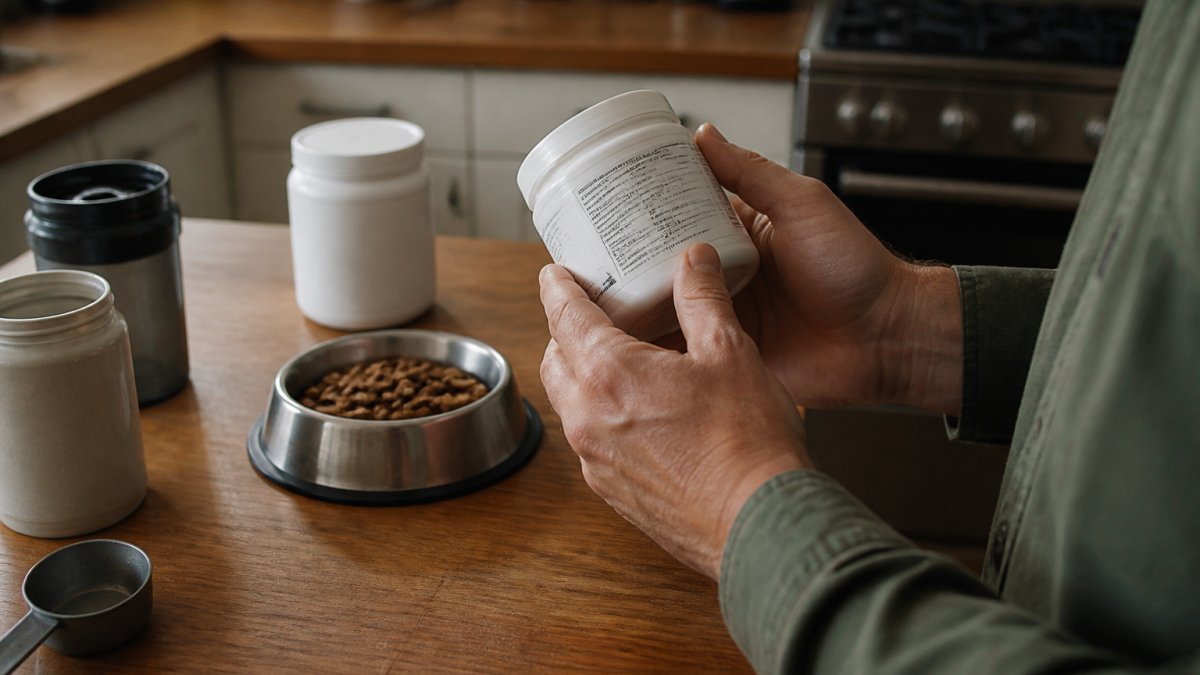
- Check the dose, not just the ingredient list. A named ingredient at a trivial amount is a label decoration.
- Check the form. Glucosamine hydrochloride and glucosamine sulphate are not interchangeable at the same gram dose.
- Check the filler load. Long lists of inactive powders dilute what you are actually paying for.
- Check safety and interactions. Existing medication, pregnancy and kidney or liver conditions all change the picture.
- Check cost per effective dose. Divide the price by the number of days at the label's own recommended serving.
Reading the Label: Doses, Forms and Fillers
Australian pet supplements are regulated as animal feed or veterinary products depending on their claims, so label requirements differ from human supplements. The Australian Pesticides and Veterinary Medicines Authority guidance on veterinary products explains which category a product falls into.
Look for a guaranteed analysis with grams per kilogram or milligrams per serving. If the label only says "proprietary blend", you cannot verify the dose.
Dog Joint Supplements: What the Evidence Actually Supports
Dog joint supplements have the strongest evidence base of any pet supplement category, with glucosamine, chondroitin and MSM the three most studied ingredients. The catch: that evidence applies at meaningful doses, not trace amounts.
Glucosamine is a building block for cartilage glycosaminoglycans. Chondroitin sulphate sits alongside it, and MSM contributes sulphur to connective tissue. Together they support the cartilage maintenance that keeps joints moving comfortably.
Glucosamine, Chondroitin and MSM at Real Doses
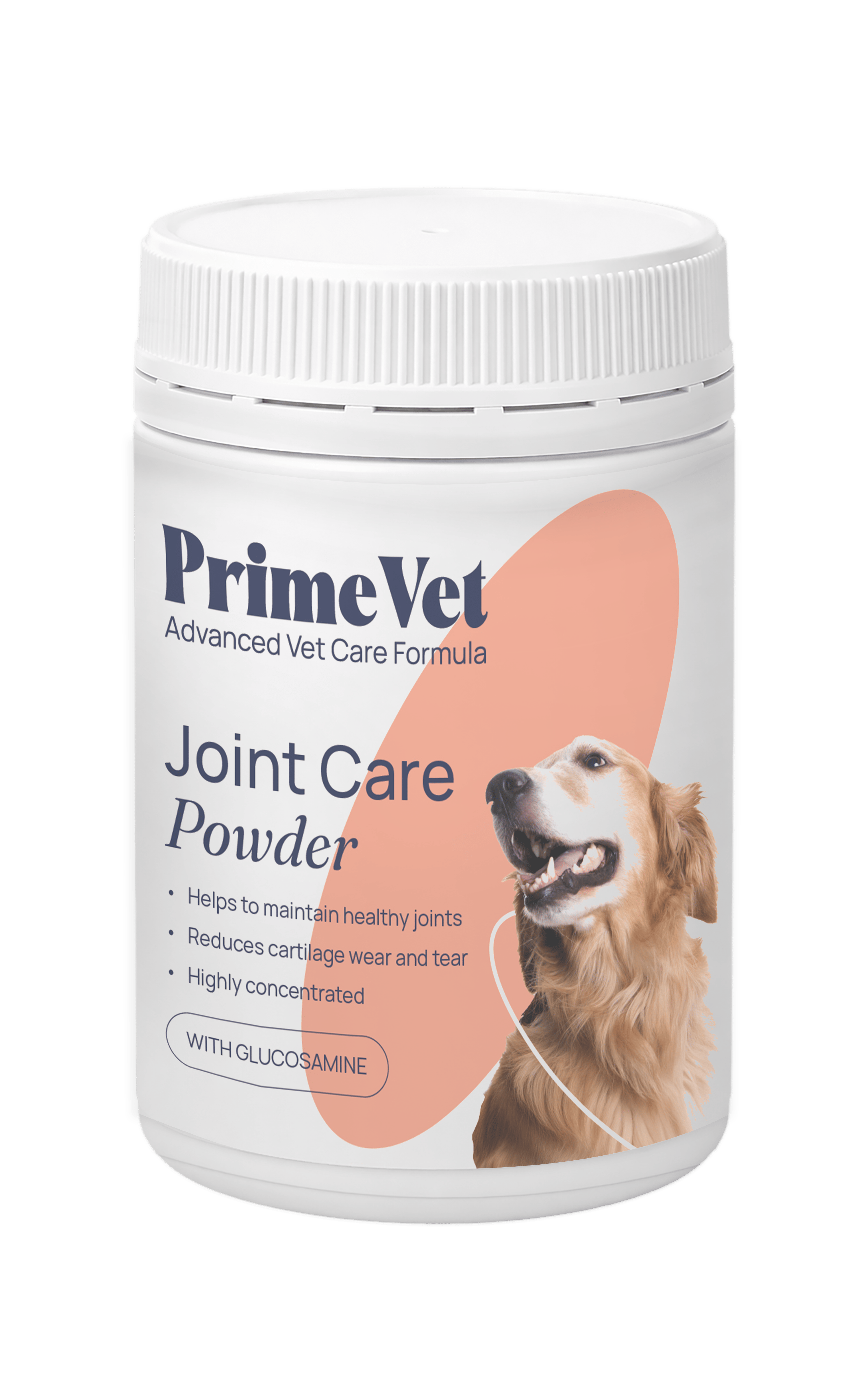
Real doses are the whole argument. Our PrimeVet™ Joint Care Powder 150g delivers glucosamine at 553.2g/kg, MSM at 96g/kg and chondroitin sulphate at 28.8g/kg, alongside hyaluronic acid, collagen, DL-methionine, taurine and amino acids including L-arginine, L-citrulline, L-histidine and L-glycine.
That concentration is the point: a 150g jar gives a 30-day supply at the label serving, making cost per day easy to calculate.
| Product | Key Actives | Format | Price | Best For |
|---|---|---|---|---|
| PrimeVet™ Joint Care Powder 150g | Glucosamine 553.2g/kg, MSM 96g/kg, chondroitin 28.8g/kg | Powder | $79.95 | Long-term daily joint care |
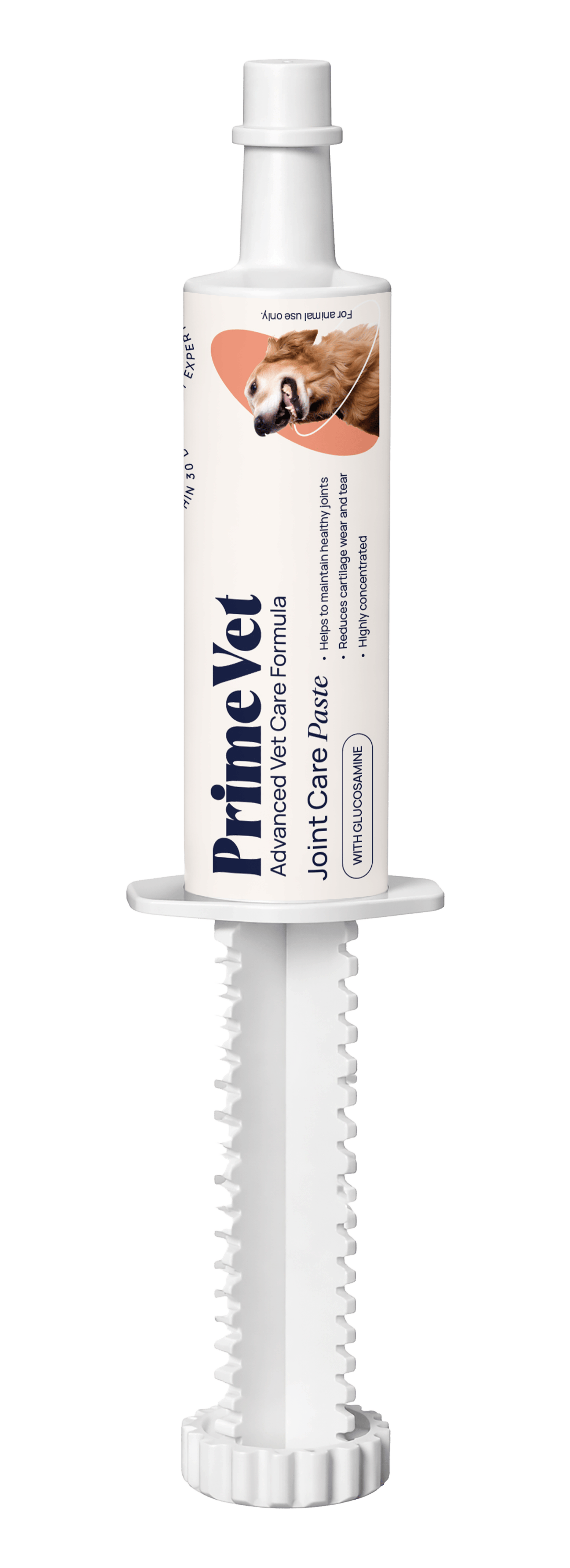
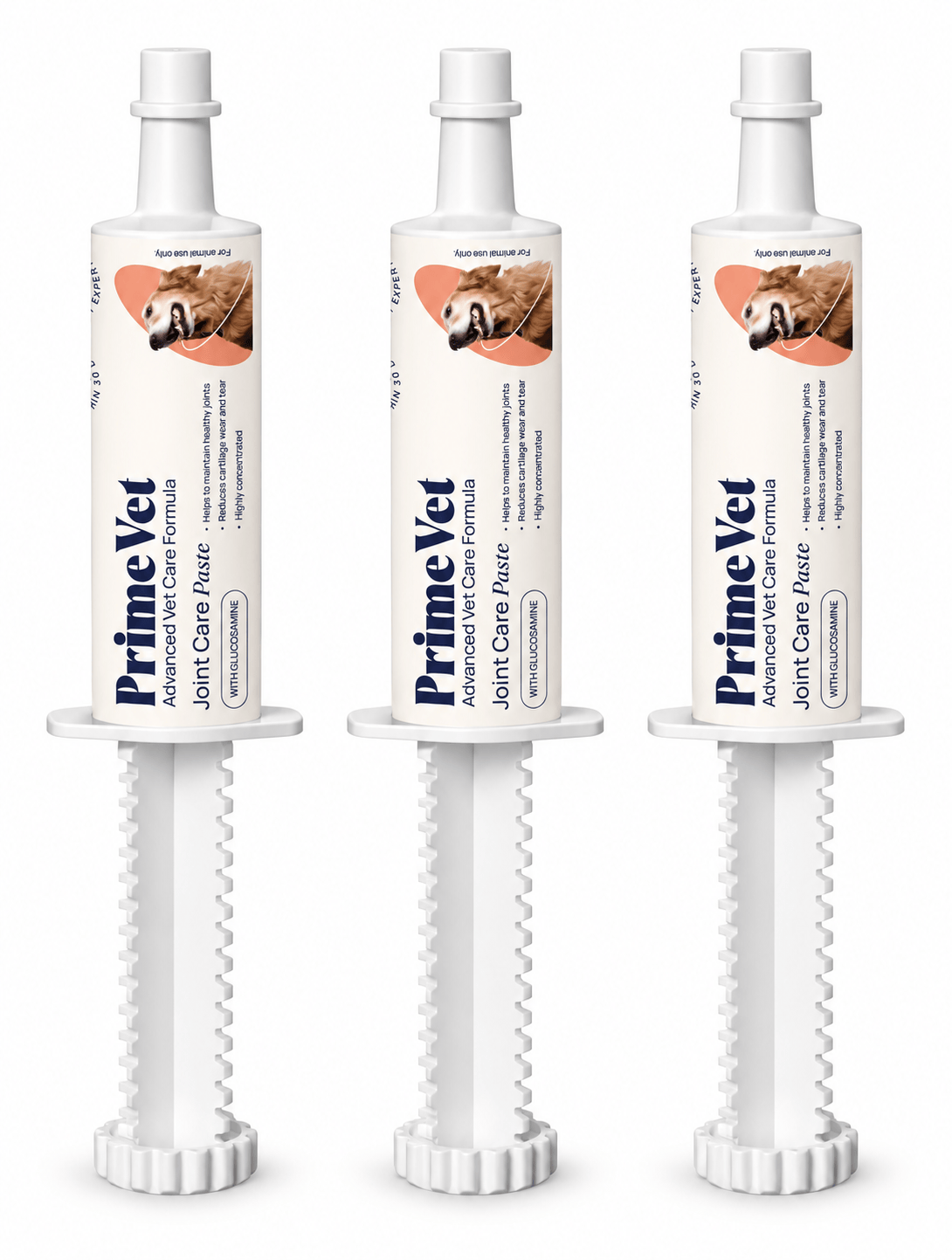
| PrimeVet™ Joint Care Paste 60ml | Same actives, concentrated | Paste | $59.95 | Dogs that refuse powder |
| PrimeVet™ Joint Care Paste 60ml, Pack of 3 | Same actives, concentrated | Paste | $139.50 | Ongoing paste routines |
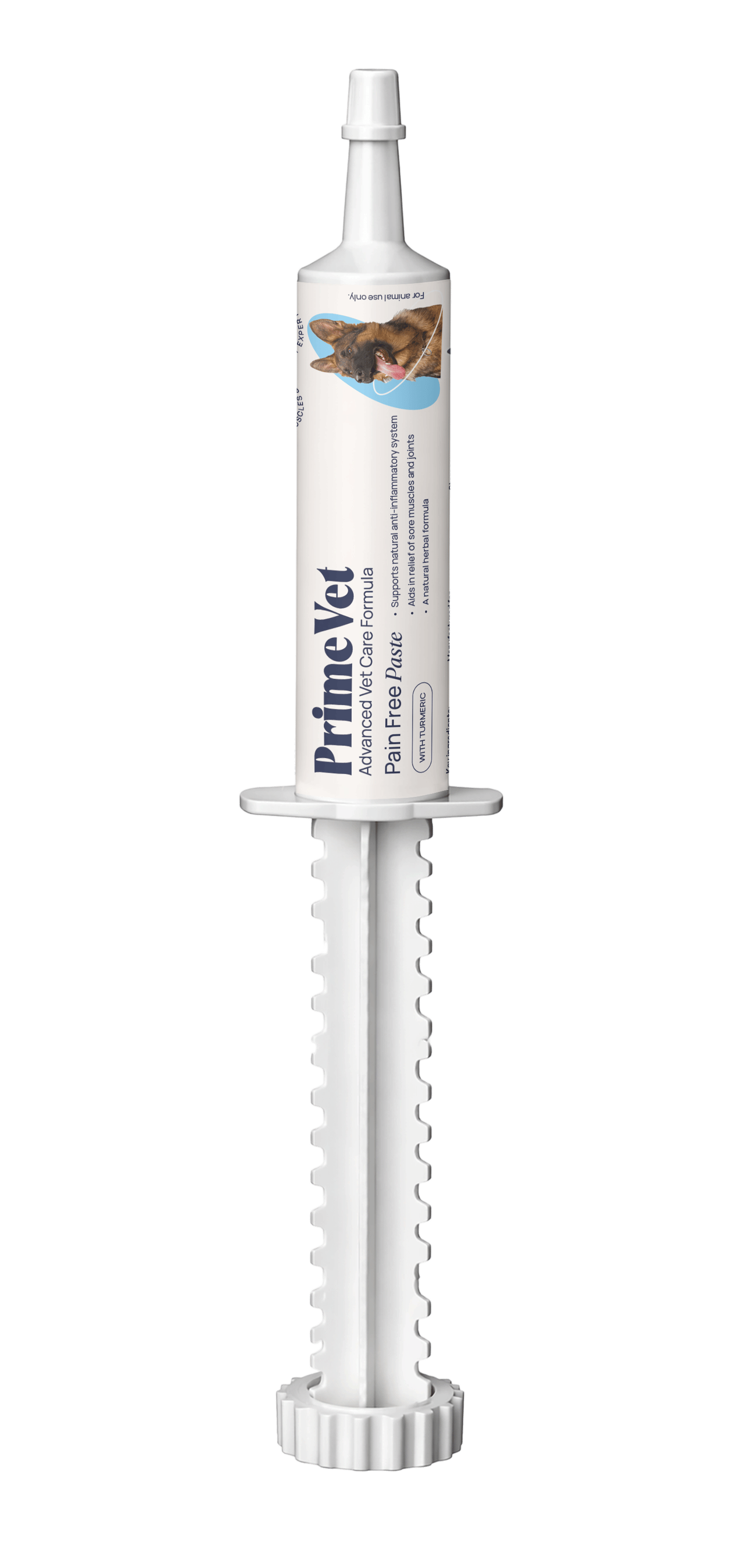
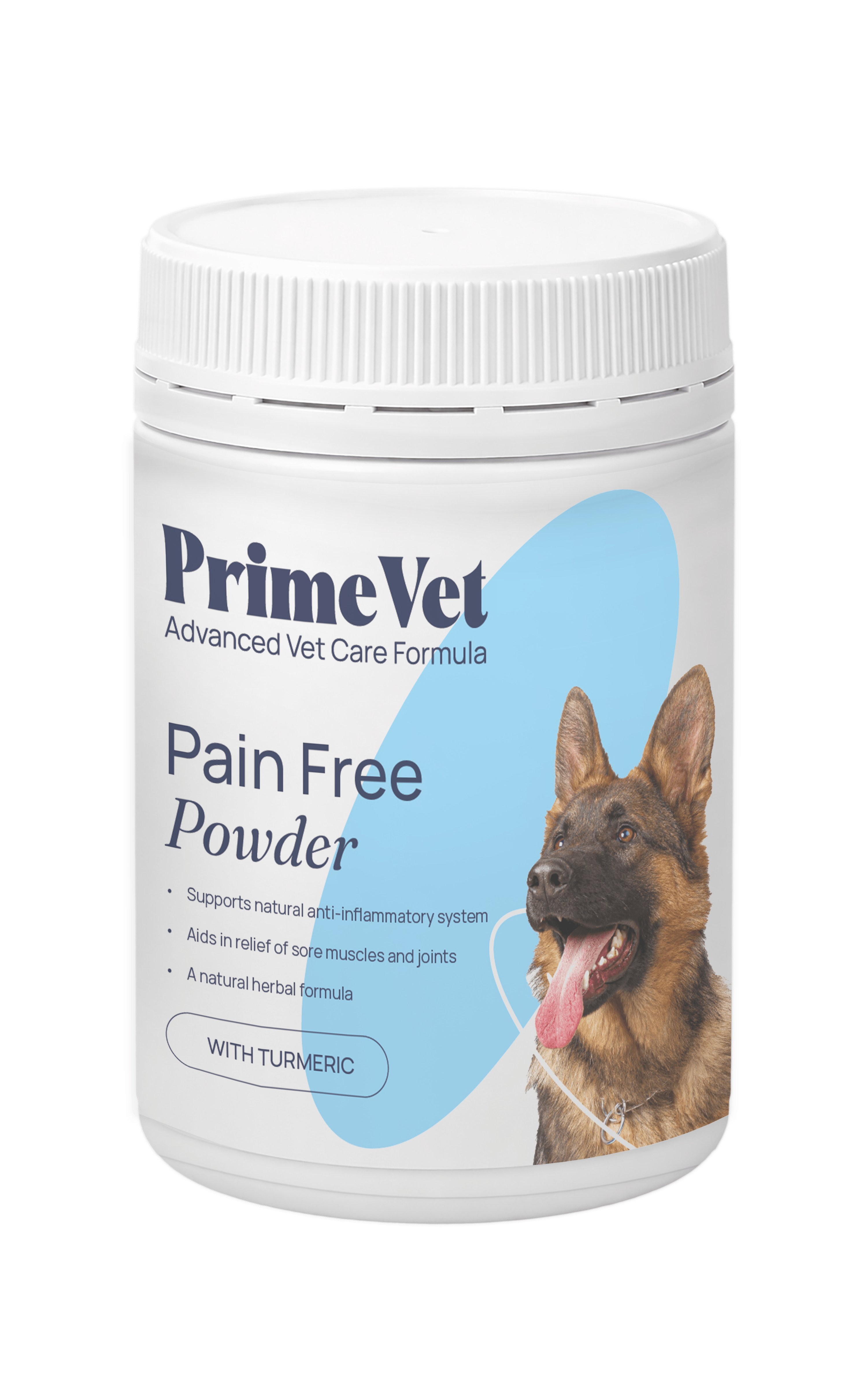
| PrimeVet™ Pain Free Powder 150g | Turmeric, celery, skullcap, passiflora, magnolia bark, Jamaican dogwood | Powder | $134.95 | Sore joints and muscles |
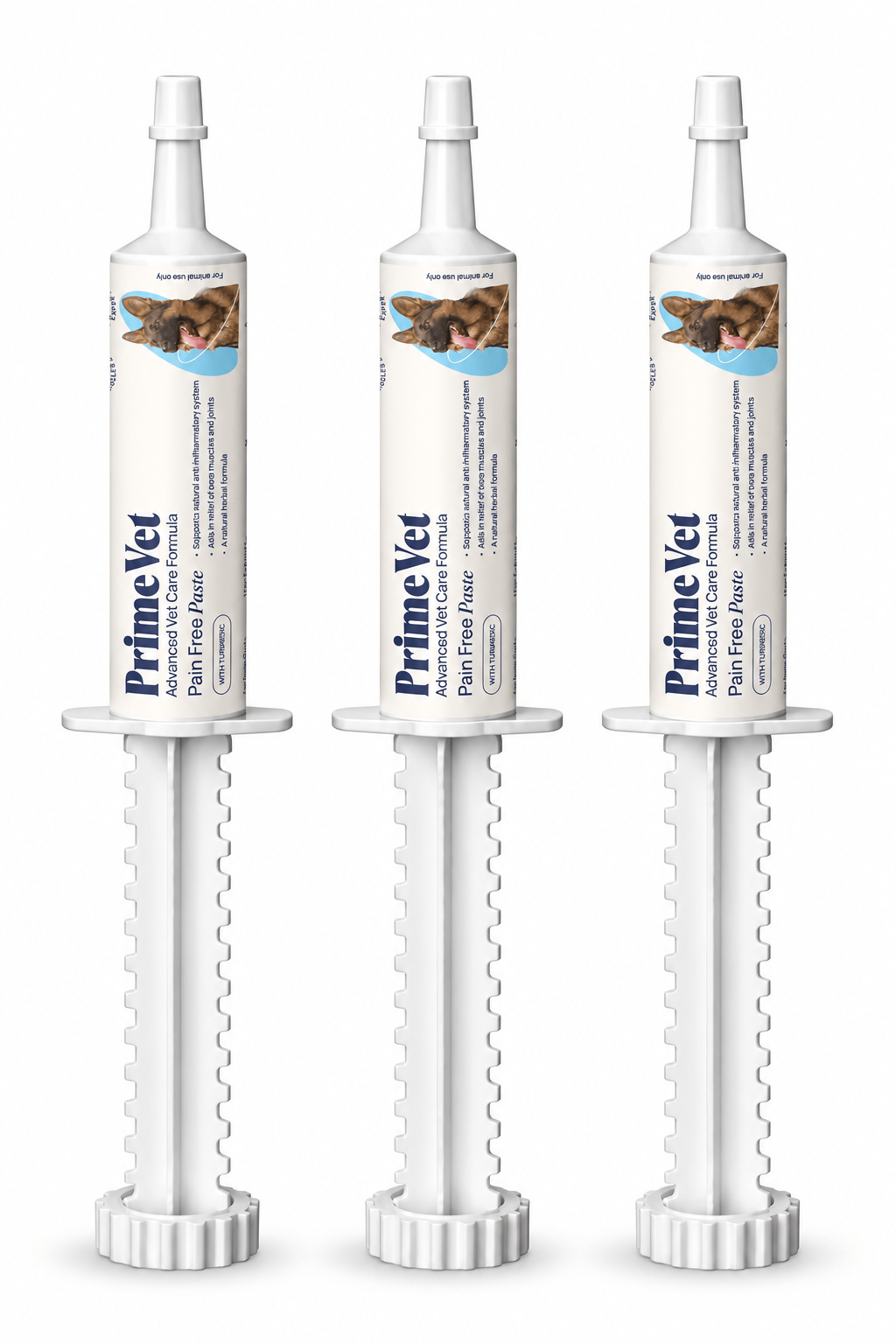
| PrimeVet™ Pain Free Paste 32ml | Same herbal blend | Paste | $49.95 | Pre or post-activity comfort |
Probiotics for Dogs: Gut Support, Skin and Immunity
Probiotics for dogs introduce live microorganisms that support the gut microbiome, which influences digestion, skin condition and immune function. Prebiotics feed those organisms; digestive enzymes help break food down.
Gut and skin health are linked more tightly than most owners realise: a dog with a persistently dull coat or recurring digestive upset often has a microbiome worth examining, because gut-associated immune tissue sits directly beneath the intestinal lining.
What Each Ingredient Class Actually Does
- Probiotics: live beneficial bacteria, dose measured in colony-forming units (CFU). Common genera include Lactobacillus, Bifidobacterium, Enterococcus and Bacillus. Strain identity matters, Lactobacillus acidophilus is not the same organism as Lactobacillus plantarum, and research on one does not transfer to the other.
- Prebiotics: non-digestible fibres and compounds that feed existing gut bacteria. Inulin, fructo-oligosaccharides (FOS), mannan-oligosaccharides (MOS) and beta-glucans are the most common in canine formulas.
- Digestive enzymes: proteins that assist breakdown of fats, proteins and carbohydrates. Protease, lipase, amylase and cellulase are typical, most useful where the pancreas or small intestine is underperforming, not as a general vitality add-on.
Strain, Dose and Viability: The Three Checks That Matter
Strain matters as much as species. A product listing "probiotics" without naming strains gives you no way to check whether the research behind it applies. Three checks separate a credible product from a hopeful one:
- Named strains, not just genera. Look for full strain designations, not just "Lactobacillus spp." A label that names the genus only cannot be matched to any published trial.
- CFU count at end of shelf life, not at manufacture. Live organisms die over time, so a product that states "10 billion CFU at time of manufacture" may deliver far less by the time your dog eats it. Reputable makers state viability at expiry.
- Delivery format and protection. Stomach acid kills many organisms before they reach the small intestine. Enteric coatings, spore-forming Bacillus strains and microencapsulation are common ways formulators protect viability through the gastric environment.
Species and Life Stage Change the Picture
Dogs and cats have different gut anatomy, transit times and resident microbiomes, so a product formulated for one species is not automatically appropriate for the other.
In practice, digestive upset responds fastest to probiotic support, skin and coat changes follow over weeks, and immune outcomes are hardest to measure outside a controlled setting, worth knowing before you judge whether a product is working.
Safety and Interactions
Probiotics are generally well tolerated but not risk-free. Immunocompromised animals, those on immunosuppressive medication, and animals with severe pancreatitis or compromised gut barriers should introduce any probiotic under veterinary guidance.
If your dog is on antibiotics, timing matters, most practitioners suggest separating the antibiotic and probiotic doses by several hours so the antibiotic does not simply kill the organisms you just administered.
PrimeVet™ Joint Care Powder 150g →
How Long Do Dog Supplements Take to Work?
Dog supplements typically take four to eight weeks to show noticeable change, depending on the ingredient and condition supported. Joint supplements sit at the slower end because cartilage turnover is gradual. But "how long" really depends on three variables most guides ignore: the tissue being supported, the animal's life stage, and whether the dose is in the studied range.
Why Each Category Has Its Own Timeline
- Digestive support: often the fastest, sometimes within days. The gut lining turns over in a matter of days, and the microbiome can shift within a week of consistent dosing. If you see nothing in ten to fourteen days, the strain or dose is probably wrong for your dog.
- Joint and mobility support: usually four to eight weeks, sometimes twelve. Cartilage is avascular, so nutrients reach it slowly by diffusion through synovial fluid; glucosamine and chondroitin must accumulate there before any structural effect is plausible.
- Skin and coat: commonly six to twelve weeks, tracking the coat growth cycle. Hair follicles cycle through growth, transition and rest phases, so you are waiting for new hair to replace old, not repairing existing hair.
Species, Age and Condition Shift the Clock
A puppy, adult and senior dog do not respond on the same schedule. Puppies have faster metabolic turnover and may show digestive changes sooner, but their joint and skeletal systems are still developing, which changes what supplementation is appropriate.
Cats are a separate case: obligate carnivores with different requirements for several nutrients, including taurine and arachidonic acid, and many canine formulas are not appropriate for them.
Condition severity also matters.
How to Judge Whether It Is Working
Owner memory is unreliable, so build a record before you start.
- Photograph or film your dog walking, rising from rest and climbing stairs at the start, then again at week six. Video comparison settles the question in a way that memory cannot.
- Score specific activities, not general impressions. "Rises from rest without help" is measurable; "seems happier" is not.
- Hold everything else constant where you can. Changing diet, exercise and supplement at the same time makes it impossible to attribute any change.
Safety, Interactions and Quality Verification
Safety comes down to three questions: what is in the product, who verified it, and does it interact with anything your dog already takes.
Small-batch production is not automatically safer, but it makes traceability easier to audit. Farrell’s and PrimeVet products are formulated by Professor David Evans BVSc PhD, Adjunct Associate Professor at Charles Sturt University and former Associate Professor in the Faculty of Veterinary Science at the University of Sydney, and produced in small batches with quality prioritised over volume.
For regulatory context on what can legally be claimed for an animal product, the APVMA information on veterinary chemical products is the reference point.
Cost Per Effective Dose: What You Are Actually Paying For
Cost per effective dose is the price divided by the number of days the product delivers its stated actives at the label serving, the only price comparison that means anything.
A $40 tub lasting ten days costs $4 a day; a $79.95 jar lasting thirty days costs about $2.67 a day. The cheaper-looking product is the more expensive one.
- Divide price by days of supply at the label's own recommended serving.
- Check the actives per serving, not per container.
- Account for waste, including powder left in the scoop or paste left in the tube.
Our PrimeVet™ Joint Care Paste 60ml at $59.95 suits dogs that will not take powder, and the pack of three at $139.50 lowers the per-day cost for long-term routines.
Conclusion: Building a Supplement Plan That Holds Up
The hard part is not finding a supplement but building a routine you can measure, with doses you can verify and a cost per day you can sustain for months rather than weeks.
Start with the joint products if mobility is the concern.
Shop the Farrell’s and PrimeVet range and build a plan your dog can stay on.
The challenge is not choosing a supplement, it is choosing one you can verify and afford to continue.
Frequently Asked Questions
What makes a pet supplement science-backed?
A science backed pet supplement states a specific active ingredient at a measurable dose, and that dose has been studied in dogs rather than inferred from human research. Look for named compounds, grams or milligrams per kilogram, a serving size tied to body weight, and a manufacturer willing to publish formulation details. Vague blends that list ingredients without amounts cannot be assessed, because you have no way to tell whether the quantity present is anywhere near what research used. Formulation by qualified veterinary scientists and clinical trial history are stronger signals than marketing claims.
How long do dog supplements take to work?
Joint support ingredients such as glucosamine and chondroitin are typically assessed over four to eight weeks, because cartilage and joint fluid changes happen slowly. Herbal comfort formulas containing turmeric or Jamaican Dogwood are often used around activity, so owners may notice differences within days rather than weeks. Probiotics for dogs can shift stool quality in one to two weeks. Track mobility, willingness to rise, and activity tolerance weekly, and review progress with your vet before deciding a product has failed.
Should I ask a vet before giving my pet supplements?
Yes, particularly if your dog takes medication or has a diagnosed condition. Some herbs and amino acids interact with pain relief, blood thinners or heart medication, and a vet can flag those risks against your dog's history. Bring the actual label so the dose and ingredient forms can be checked. Veterinary-formulated ranges make this conversation easier because the formulation rationale is documented, but a vet still needs to confirm the product suits your dog's weight, age and current treatment plan.
How can I check the quality of a pet supplement?
Start with the label: named ingredients, doses, a batch number and an expiry date. Then check how the product is made, since small-batch production with documented quality control reduces contamination risk. Ask whether the manufacturer formulates with veterinary input and whether they can explain why each ingredient is included at that amount. Price is a weak quality signal on its own, so compare cost per effective dose at the label's stated serving size rather than the sticker price of the tub.


Leave a comment
All comments are moderated before being published.
This site is protected by hCaptcha and the hCaptcha Privacy Policy and Terms of Service apply.